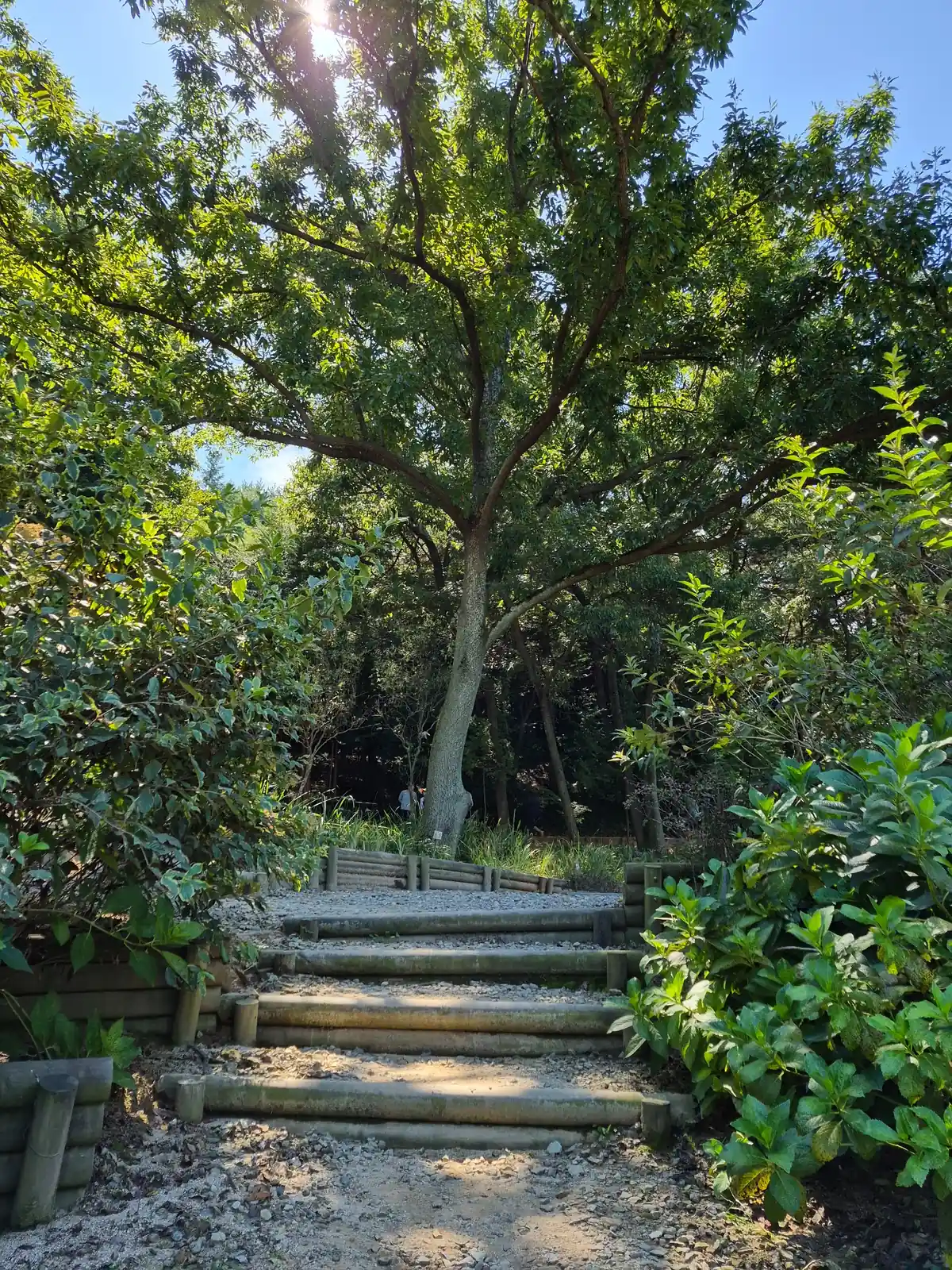
When people imagine traveling in Korea, they often picture the busy streets of Seoul, famous palaces, beaches, or crowded tourist attractions.
But there is another side of Korea that is much quieter.
In Yeonggwang County, where I live, there is a low mountain called Mulmusan. Around it is Mulmusan Happy Forest, a place where local residents can walk beneath the trees and enjoy a slower side of rural Korea.
Mulmusan is only 259 meters high, but the forest around it is surprisingly rich and green. A roughly 10-kilometer forest trail circles the area, with several themed forest spaces along the way.
This is not the kind of place where you need a complicated travel plan.
Sometimes, walking into the forest is enough.
A Forest Close to Everyday Life
One of the things I like about Mulmusan is that it does not feel separated from everyday life.
It is a forest in Yeonggwang, surrounded by the rural landscape of southwestern Korea. You can leave the roads and buildings behind and, before long, find yourself surrounded by trees.
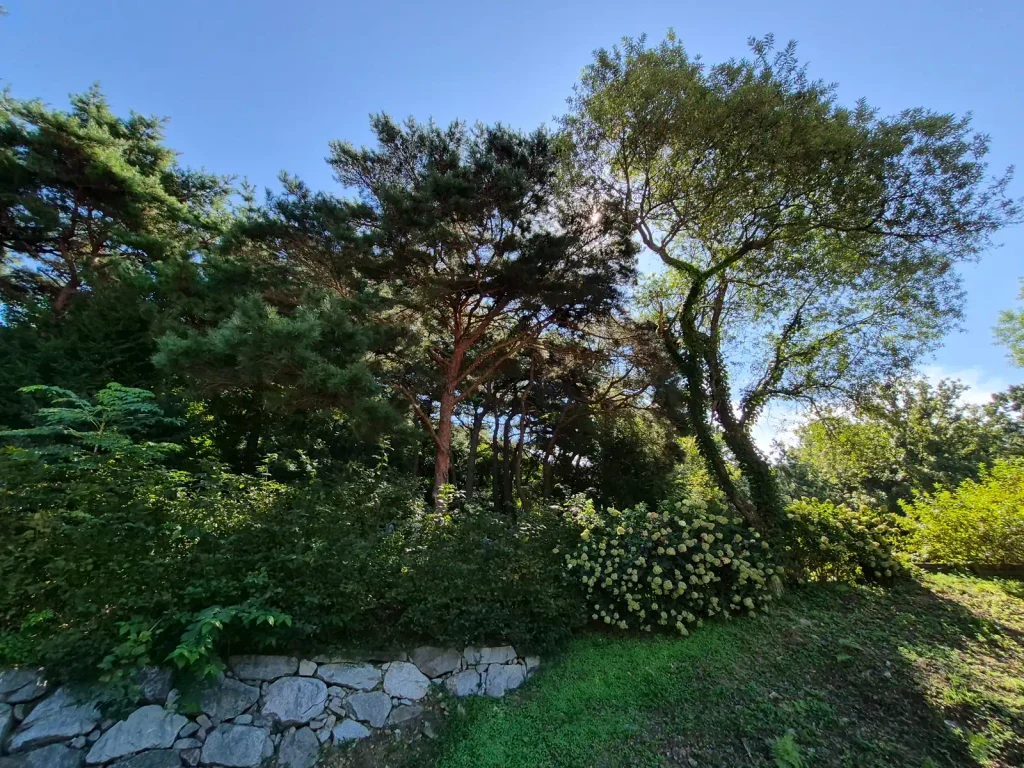
The change in atmosphere is simple but noticeable.
Sunlight comes through the branches. Large trees rise above smaller plants and shrubs. In some places, stone borders and maintained paths remind you that this is a public forest, but nature still dominates the view.
Mulmusan Happy Forest includes a 10-kilometer forest trail as well as spaces such as a children’s forest experience area, cypress meditation areas, pine forest areas, and other places designed for walking and resting.
But you do not need to visit every part of it to enjoy the forest.
A short walk can be enough.
Looking Up Changes the View
Walking through a forest is different from walking through a city.
In a city, our eyes naturally stay around street level. We look at signs, cars, buildings, shops, and other people.
In the forest, I often find myself looking upward.
The trees overlap above the trail, and pieces of blue sky appear between the branches.
Light changes constantly as you walk.
Sometimes the sun is hidden behind the leaves. A few steps later, sunlight suddenly reaches the ground.
That may sound like a very ordinary experience.
And it is.
But that is also what makes places like Mulmusan interesting to me. Not every place in Korea needs to be spectacular or famous to be worth seeing.
Inside the Forest
Walk a little farther and the forest becomes denser.
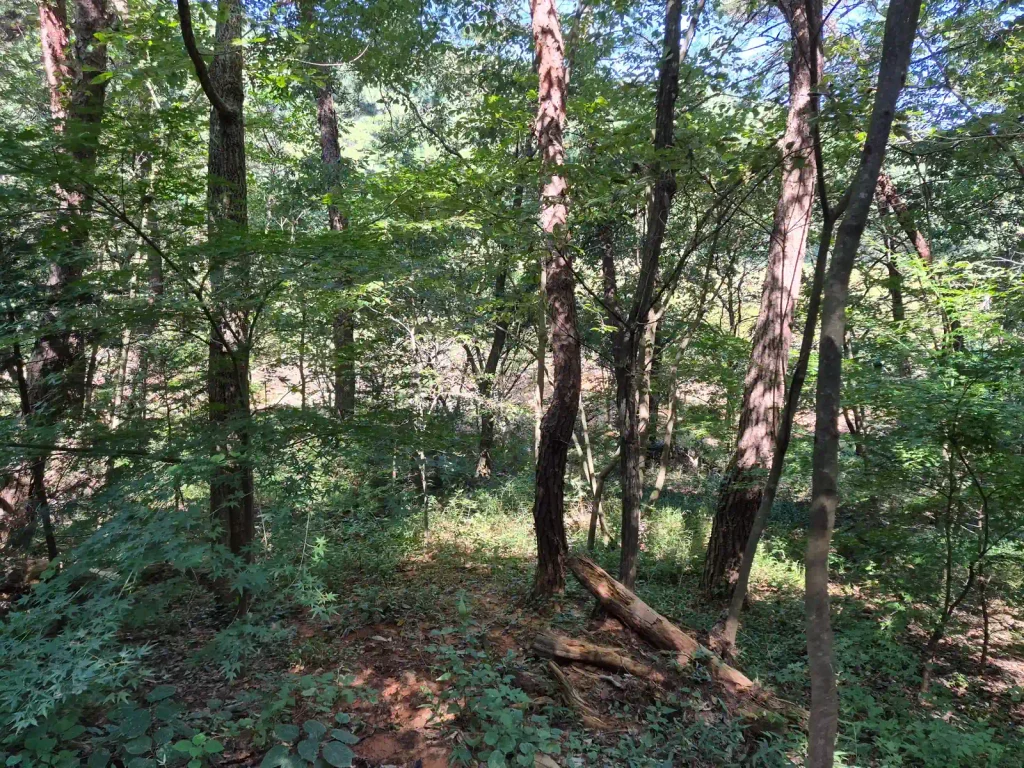
Here, there is less open sky.
Trees of different sizes stand close together, while fallen branches, leaves and plants cover the forest floor.
This is a very different image of Korea from the one many international visitors first encounter.
There are no skyscrapers.
No neon signs.
No subway stations.
Just trees, sunlight and the forest floor.
Places like this are part of everyday Korea too, especially once you leave the largest cities and travel into smaller counties and rural communities.
September Brings a Flash of Red
There was one small detail that stood out during this walk.
Among all the green and brown of the forest floor was a bright red flower: sangsahwa.
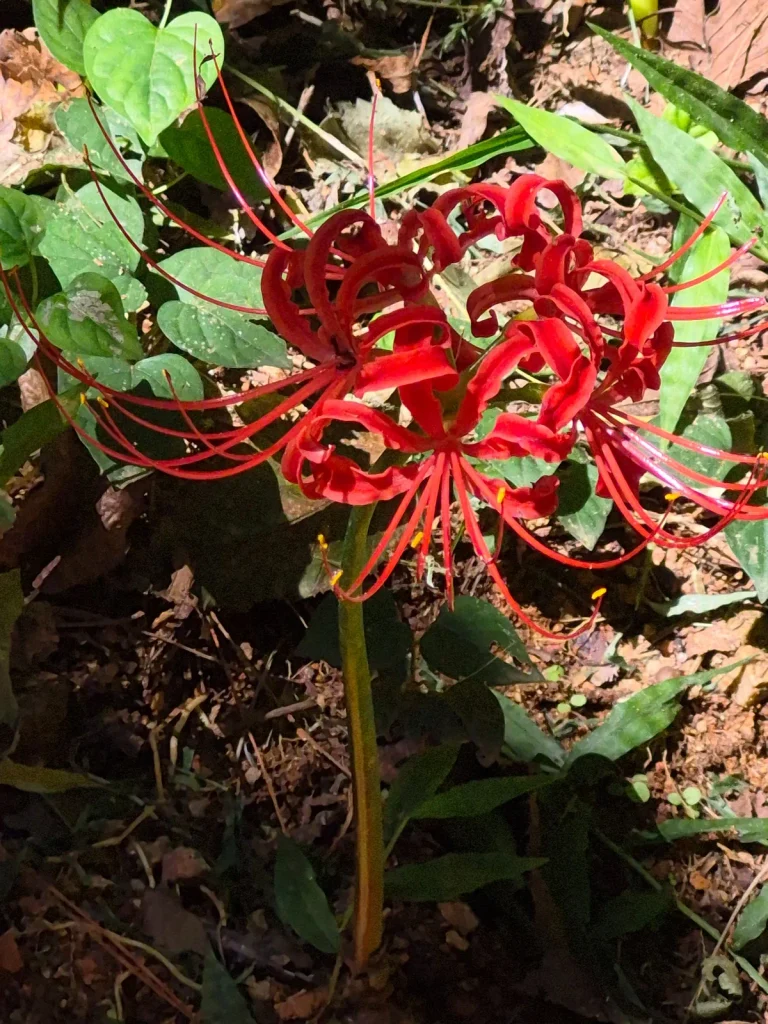
Sangsahwa is closely associated with Yeonggwang, and September is an especially interesting time to see these red flowers in the area. Official tourism information for Mulmusan Happy Forest specifically notes that sangsahwa blooms along the trail in September.
The flower has an interesting name and story in Korea.
The name sangsahwa (상사화, 相思花) is associated with longing. It is commonly explained through the unusual growth pattern in which the leaves and flowers appear at different times, so they do not meet. That separation became connected with the poetic idea of two people longing for each other but unable to meet.
In Yeonggwang, the flower has even greater local significance. The county designated plants of the Lycoris genus, commonly grouped locally under the sangsahwa name, as its county flower in 2009.
Seeing a single red flower on a quiet forest walk may seem like a small thing.
But sometimes those small details are what you remember.
Mulmusan Has Another Way to Walk
Mulmusan Happy Forest is also known for something quite different: its barefoot red clay trail.
The forest contains a 2-kilometer barefoot trail, including both wet and dry red-clay sections. It has become one of the best-known features of the area.
But I think it is worth looking beyond the red clay trail.
Mulmusan itself has another attraction: simply walking through the forest.
You can follow the trees, stop beneath the shade, look up through the branches, and notice small seasonal changes along the trail.
That is a different experience from visiting a major tourist attraction.
And perhaps that is the point.
A Different Kind of Korea
Korea is a highly urbanized country, and its modern cities are an important part of what makes the country interesting.
But they are not the whole story.
Travel into rural Korea and the pace and scenery begin to change.
Mountains sit behind villages. Forests begin near farmland and small towns. Roads become quieter, and places that would barely appear on an international tourist itinerary become part of everyday life.
Mulmusan Happy Forest is one of those places.
It does not need a famous landmark at the end of the trail.
The forest itself is the experience.
A few steps.
Sunlight between the trees.
A patch of blue sky overhead.
And, in September, perhaps a red sangsahwa blooming beside the trail.
Sometimes that is enough to show another side of Korea.