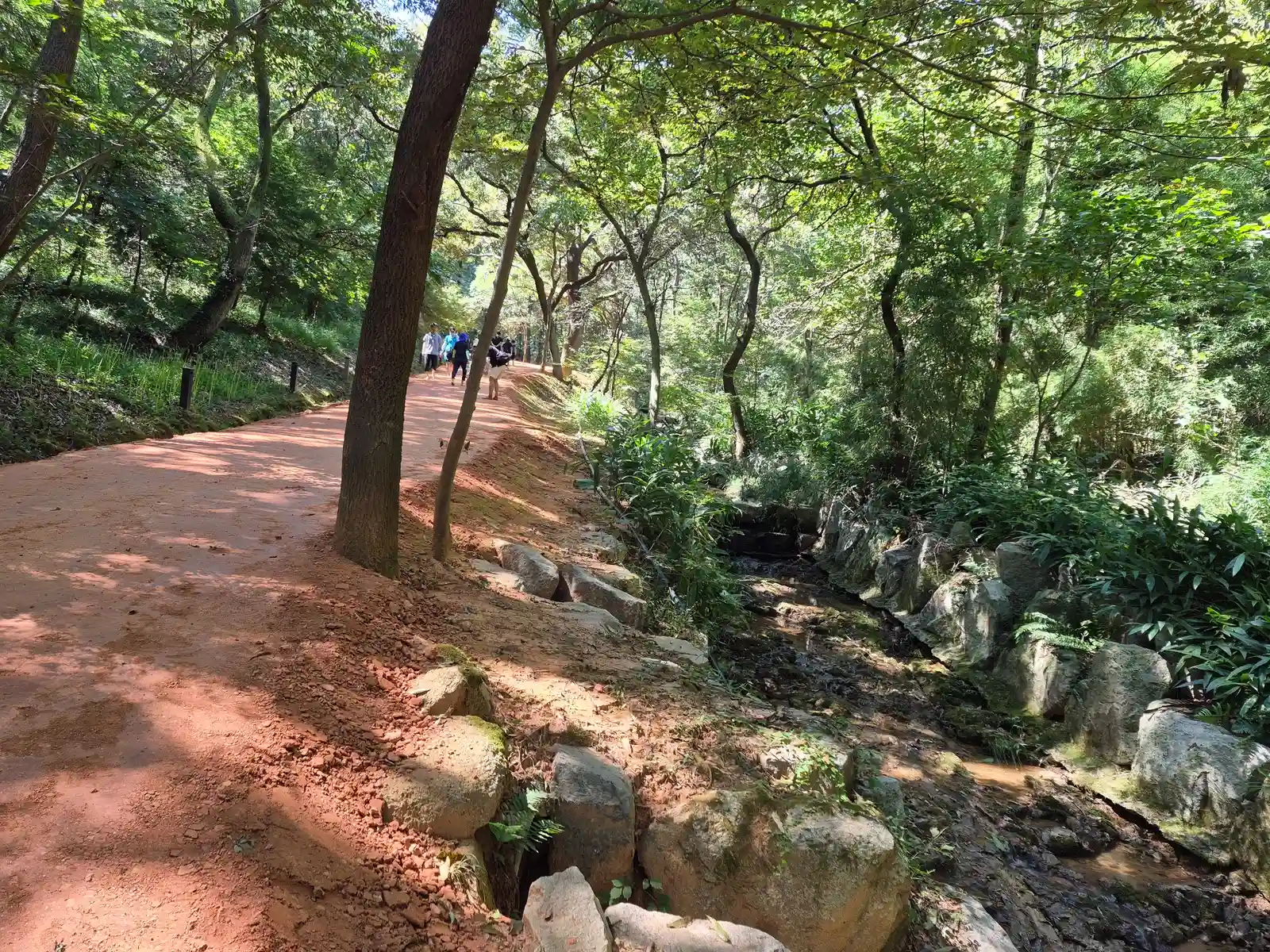
Barefoot walking has become a familiar sight in many parts of Korea.
People take off their shoes and walk on soil, forest paths, and specially prepared red clay trails. Some do it for exercise, some enjoy the feeling of the ground beneath their feet, and others believe it is good for their health.
In Yeonggwang County, where I live, there is a place made specifically for this experience: the barefoot red clay trail at Mulmusan Happy Forest.
Surrounded by trees, the trail offers something quite different from walking on pavement. Instead of shoes hitting concrete, your bare feet touch dry earth, soft red clay, and sometimes wet, muddy ground.
And here, taking off your shoes is not an unusual thing to do.
It is exactly what the trail was made for.
A Two-Kilometer Trail Made for Bare Feet
The barefoot trail at Mulmusan Happy Forest is about 2 kilometers long.
What makes it interesting is that it is not all the same.
There are two types of trail: approximately 600 meters of wet, muddy red clay and 1.4 kilometers of dry red clay. This allows walkers to experience very different textures under their feet.
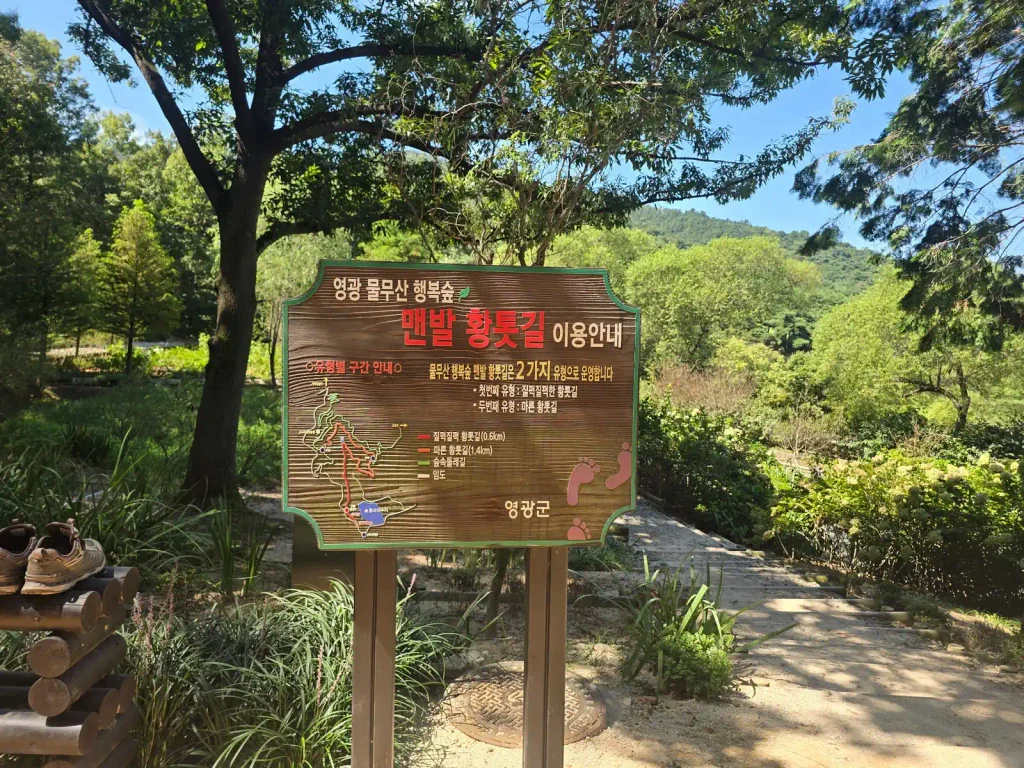
The difference may sound small when you read about it, but walking barefoot makes you notice the ground much more than usual.
Dry sections feel firm and relatively easy to walk on.
Wet clay is a completely different experience. It can feel cool, soft, slippery, and messy.
That is part of the fun.
Leave Your Shoes Behind
One of the first things you notice is that the facilities are actually designed around barefoot walking.
There are places where visitors can leave their shoes before entering the trail.
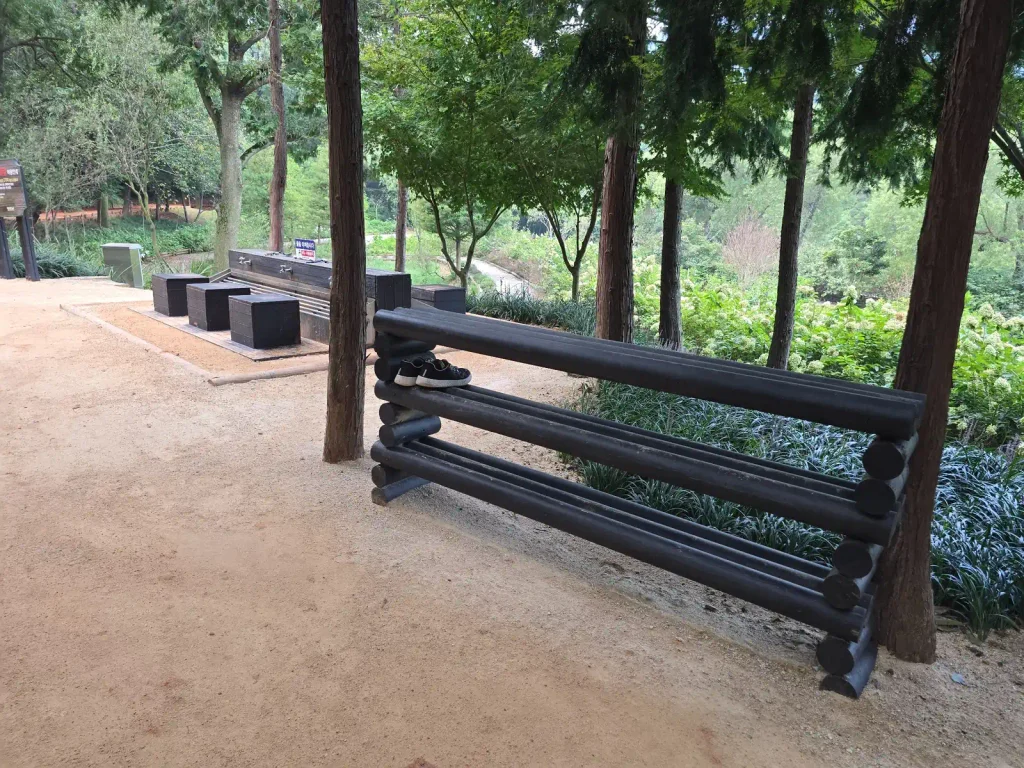
You take off your shoes, leave them behind, and start walking.
It is a simple routine, but it changes the experience immediately.
Most of us spend nearly the entire day wearing shoes. Outside the house, walking barefoot can even feel slightly strange at first.
Here, it feels completely normal.
Everyone is here to do the same thing.
What Does Walking on Red Clay Feel Like?
The interesting part begins when your feet actually touch the trail.
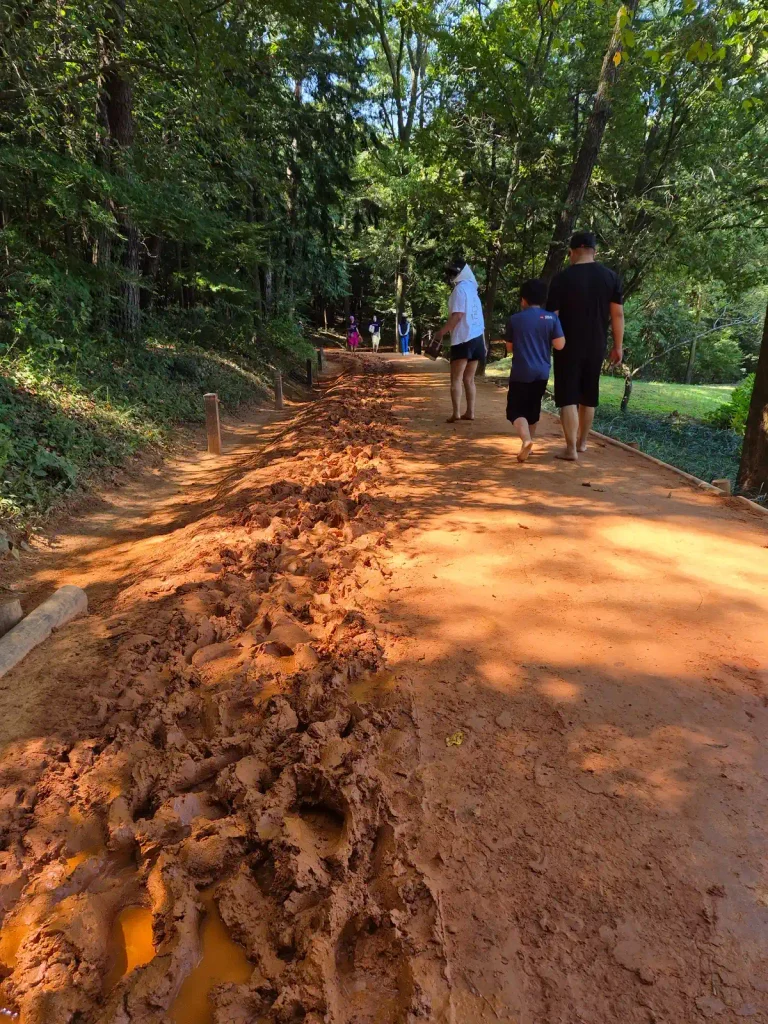
You begin to notice things that shoes normally hide.
The temperature of the ground.
Whether the surface is hard or soft.
Small changes in texture.
And, on the wet section, red clay pressing against the bottom of your feet.
Walking barefoot also naturally makes you pay more attention to each step. Instead of simply moving forward, you begin watching where your feet land and noticing the trail itself.
That is one reason this kind of walking can feel very different from an ordinary walk.
The Trail Is Carefully Maintained
Something visitors may not realize is how much maintenance goes into keeping a natural-looking trail like this usable.
Leaves, branches, and other debris are regularly cleared from the trail. The red clay itself is also maintained so that people can continue walking on it barefoot.
I have seen this maintenance taking place in the morning, with the trail being cleaned before people use it.
That matters because people are walking here with bare feet.
The result is an interesting balance: you are walking directly on earth in a forest, but the space is still actively maintained as a public recreation facility.
That is something worth noticing about rural Korea. Local government facilities are not always large or flashy. Sometimes they are simple places like this, maintained so residents can exercise, walk, and enjoy the surrounding forest.
A Place to Stop Along the Way
You do not have to treat the two kilometers like a race.
There are places where you can slow down and rest.
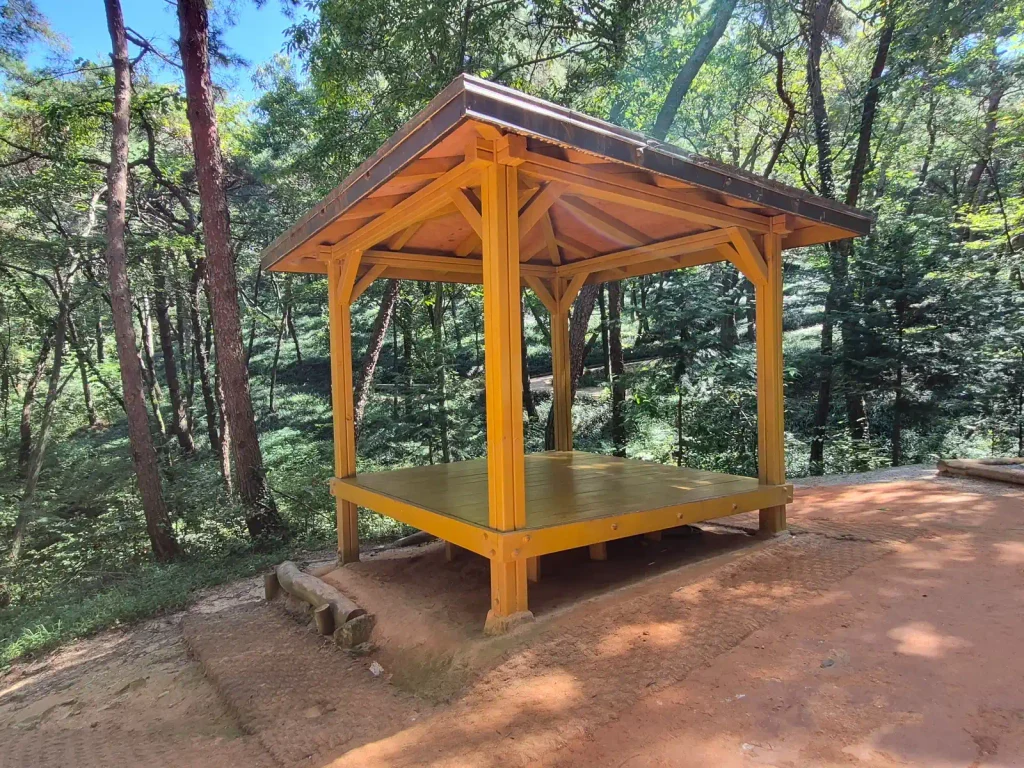
That fits the atmosphere of the place.
This is not really about reaching a destination as quickly as possible.
It is about walking.
Feeling the ground.
Stopping when you want to.
And spending some time beneath the trees.
Why Is Barefoot Walking So Popular in Korea?
Barefoot walking has attracted a lot of attention in Korea, especially among people interested in health and outdoor exercise.
You will hear many claims about its possible benefits.
People often say that barefoot walking helps circulation, improves sleep, reduces stress, stimulates the soles of the feet, or even helps with blood sugar control.
There has also been research into barefoot walking and forest walking, with some studies reporting positive changes in areas such as sleep, stress, or well-being.
Walking slowly through a quiet forest, moving your body, feeling the earth beneath your feet, and spending time outdoors can be an enjoyable experience in itself.
Wash Your Feet Before Putting Your Shoes Back On
Of course, there is one practical problem with walking barefoot on red clay.
Your feet get dirty.
Especially if you choose the wet section.
That is why foot-washing facilities are an important part of the trail.
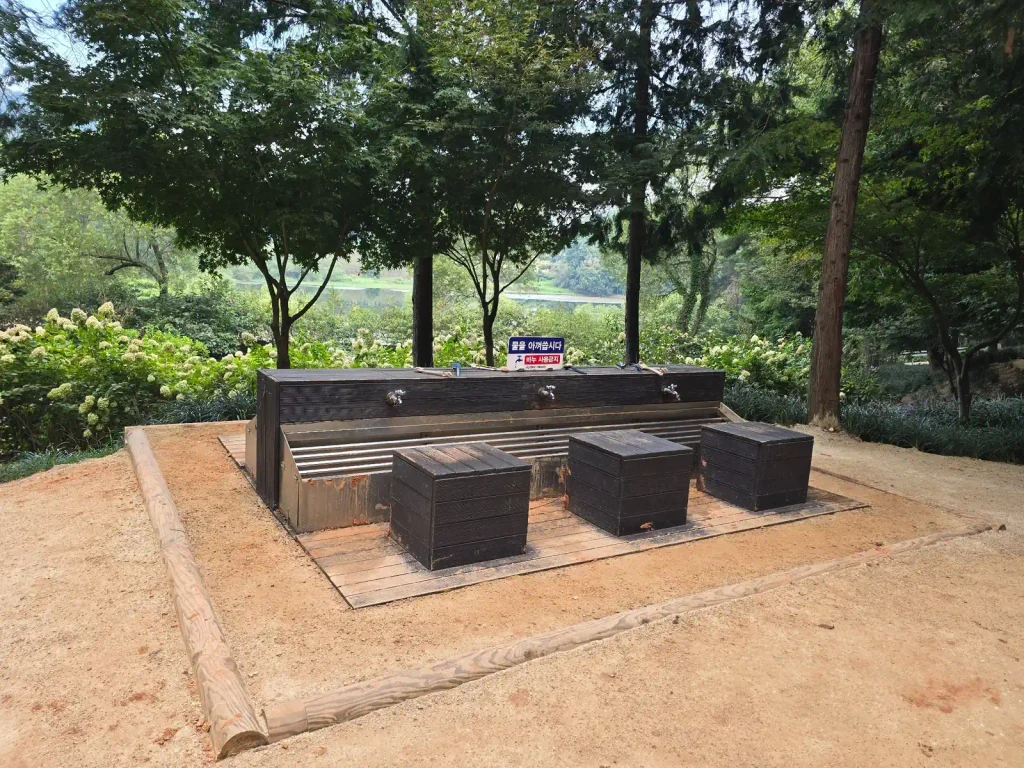
Foot-washing facilities are available along the route, including at the starting point, around the midpoint, and near the end.
After walking, you can wash the clay and dirt from your feet before putting your shoes back on.
It sounds like a small detail.
But without facilities like these, a barefoot trail would be much less convenient to use.
When Can You Walk the Trail?
The barefoot red clay trail at Mulmusan Happy Forest operates seasonally, generally from April through October.
This is worth knowing before making a special trip, because the barefoot trail itself does not operate throughout the entire year.
Mulmusan Happy Forest, however, offers more than just the barefoot trail. There are forest paths and other recreation areas where visitors can spend time among the trees.
So after washing your feet and putting your shoes back on, you can continue walking through the forest.
A Different Way to Experience Rural Korea
Many travelers come to Korea looking for famous palaces, food, shopping, K-pop, or the nightlife of Seoul.
Those are all real parts of Korea.
But so is this.
A quiet forest in a rural county.
A wooden rack with shoes left behind.
People walking through red clay with bare feet.
A place to sit beneath the trees.
And a row of taps where everyone washes the mud from their feet before going home.
None of these things is spectacular by itself.
Together, however, they show a small part of everyday life that international visitors may rarely see.
For someone who wants to see Korea beyond its major cities and famous tourist attractions, places like Mulmusan Happy Forest offer a different experience.
You do not always need a famous attraction to experience Korea.
Sometimes you just need to take off your shoes and walk.