When people imagine cafes in South Korea, they may picture modern buildings in Seoul, crowded streets, and stylish interiors.
But travel into the Korean countryside, and you can find something very different.
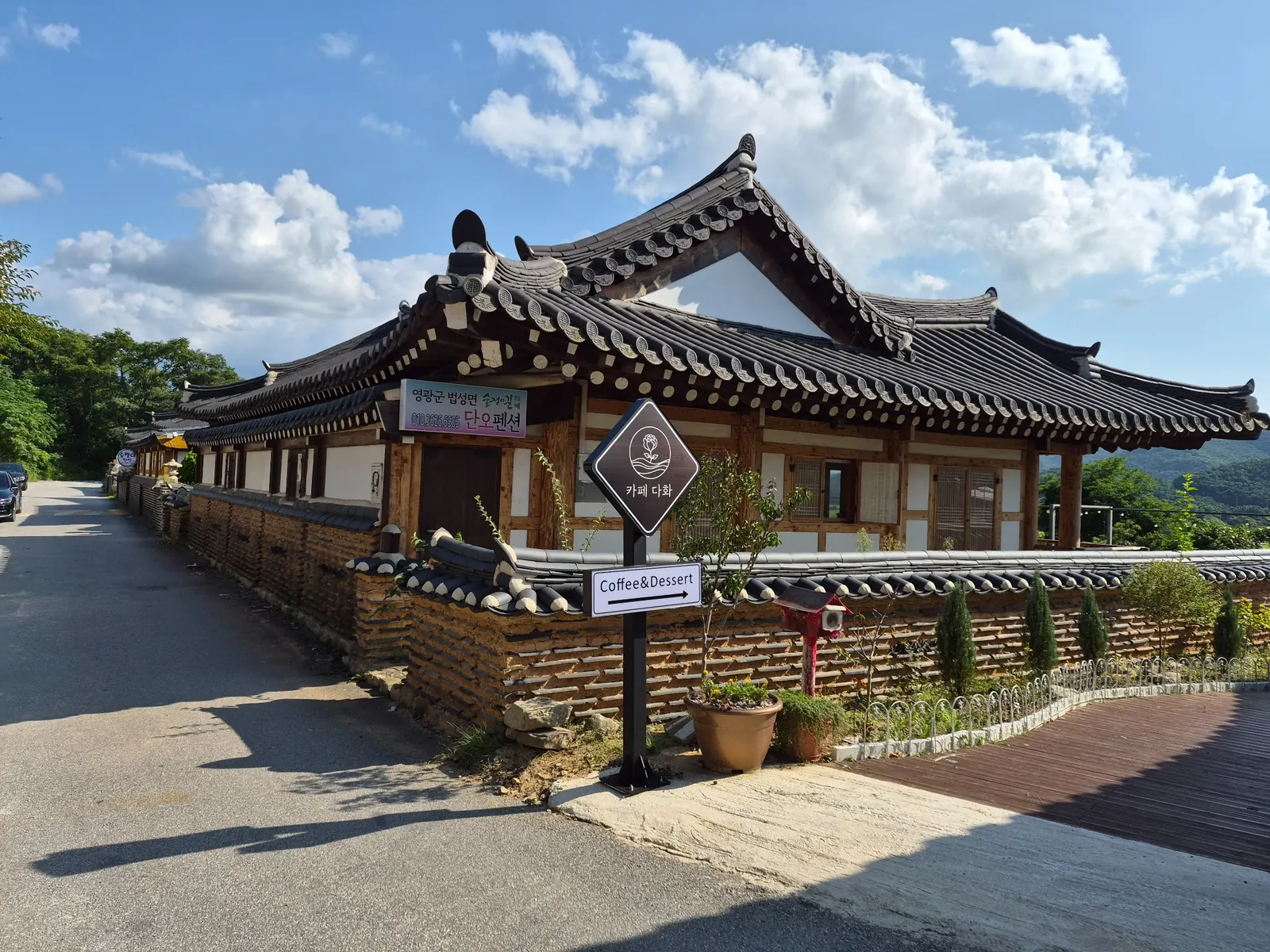
In Beopseong-myeon, Yeonggwang, there is a small area where hanok-style buildings sit together along a quiet rural road. Some are used as accommodations, while one of them is home to a cafe called Cafe Dahwa (카페 다화).
I visited this place myself, and what caught my attention was not simply the coffee. It was the way traditional Korean architecture had been turned into a comfortable modern space.
A Cafe Surrounded by Hanok Buildings
Cafe Dahwa is located at 77-14 Supjaengi-gil, Beopseong-myeon, Yeonggwang-gun, South Korea.
This is not a cafe standing alone beside a highway or in a commercial district. It sits among a group of hanok-style buildings in a quieter part of Yeonggwang.
Walking through the area, I could see hanok buildings around the cafe, including buildings being used as pensions, the Korean term commonly used for small vacation accommodations.
That makes the experience quite different from simply visiting a modern cafe decorated to look traditional.
Here, the cafe is part of a larger hanok setting.
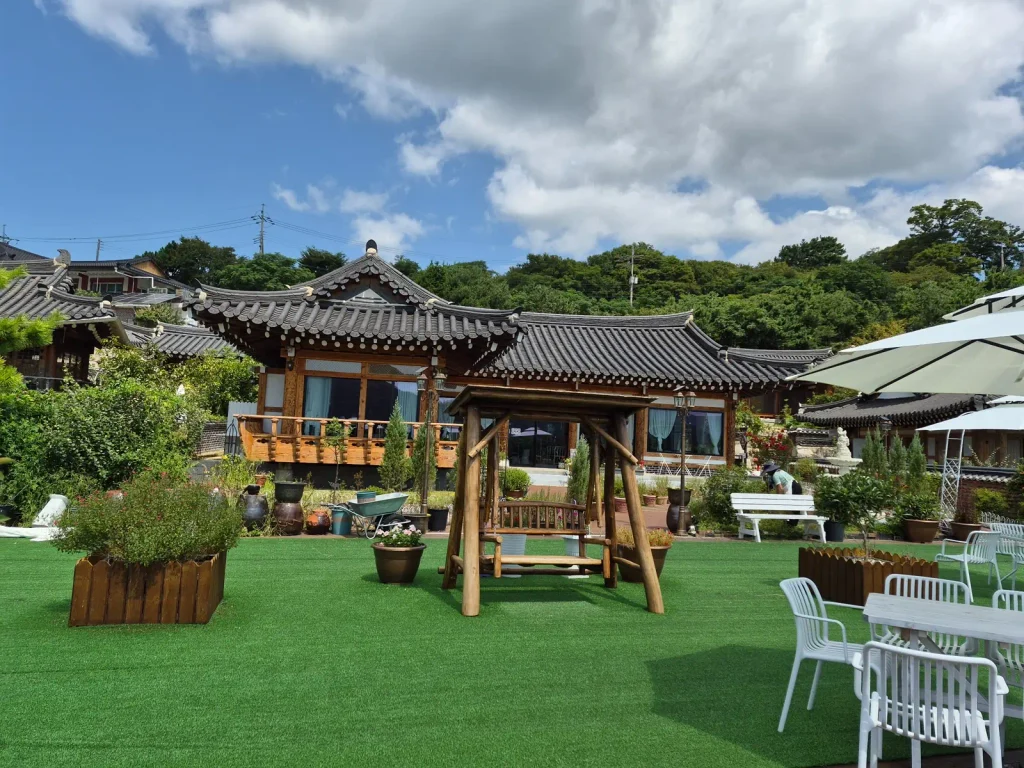
The curved tiled roofs, wooden structures and surrounding mountains immediately make the place feel far removed from the dense city landscapes many foreign visitors associate with Korea.
Hanok Is No Longer Just Something to Look At
A hanok is a traditional Korean house, but in Korea today, hanok buildings are not necessarily preserved only as museums or historic attractions.
Some are used as homes, while others have found new purposes.
Around the country, you can find hanok accommodations, restaurants, cultural spaces and cafes. In rural areas, these places can be especially interesting because traditional architectural elements often exist alongside ordinary modern life.
Cafe Dahwa is a good example of what that combination can look like.
From outside, the dark tiled roof, wooden columns and broad eaves immediately give the building a distinctly Korean appearance.
Step inside, however, and the atmosphere changes.
Traditional Wooden Beams, Modern Cafe Life
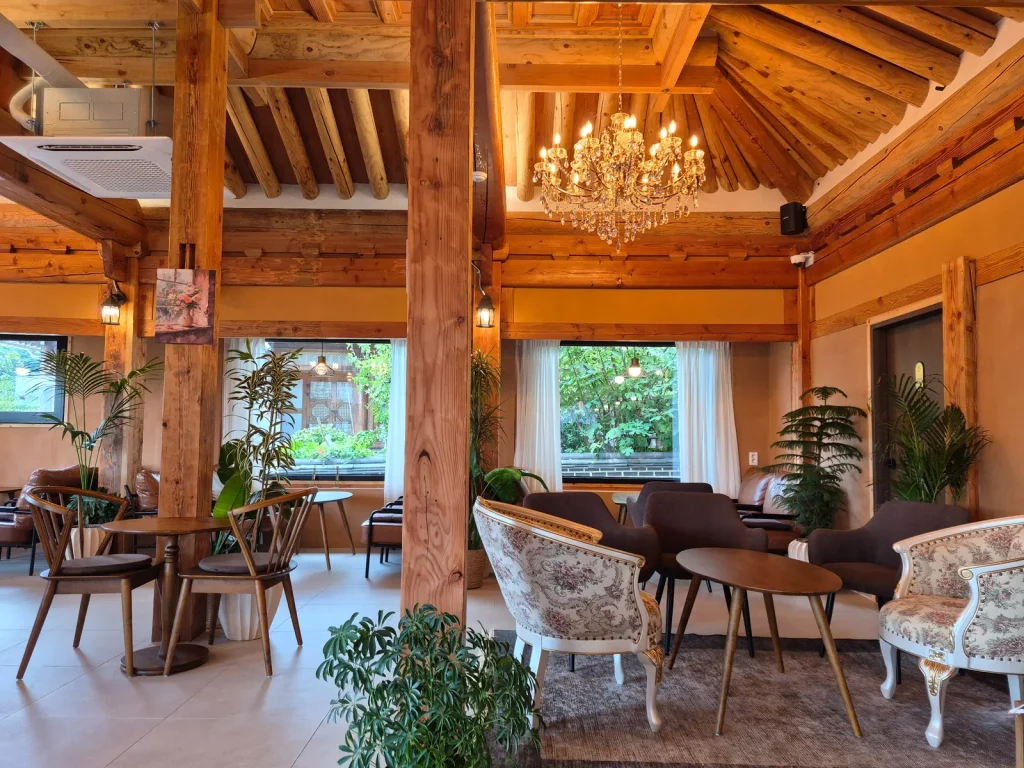
Inside Cafe Dahwa, the wooden structure remains the most striking feature.
Large wooden columns and beams stretch across the interior, and the structure of the roof remains clearly visible above the seating area.
But look around and you will also see chandeliers, air-conditioning units, modern windows, tables, chairs and indoor plants.
It is an interesting contrast.
Nothing about the space feels like entering a museum. People sit beneath traditional-style wooden beams, drink coffee and talk with friends just as they would in any other cafe.
The building provides the Korean character, while the interior provides the conveniences people expect from a modern cafe.
For me, this was one of the most interesting parts of the visit.
It shows how traditional-looking architecture can continue to be part of everyday life rather than simply becoming something from the past.
A Garden Outside the Hanok
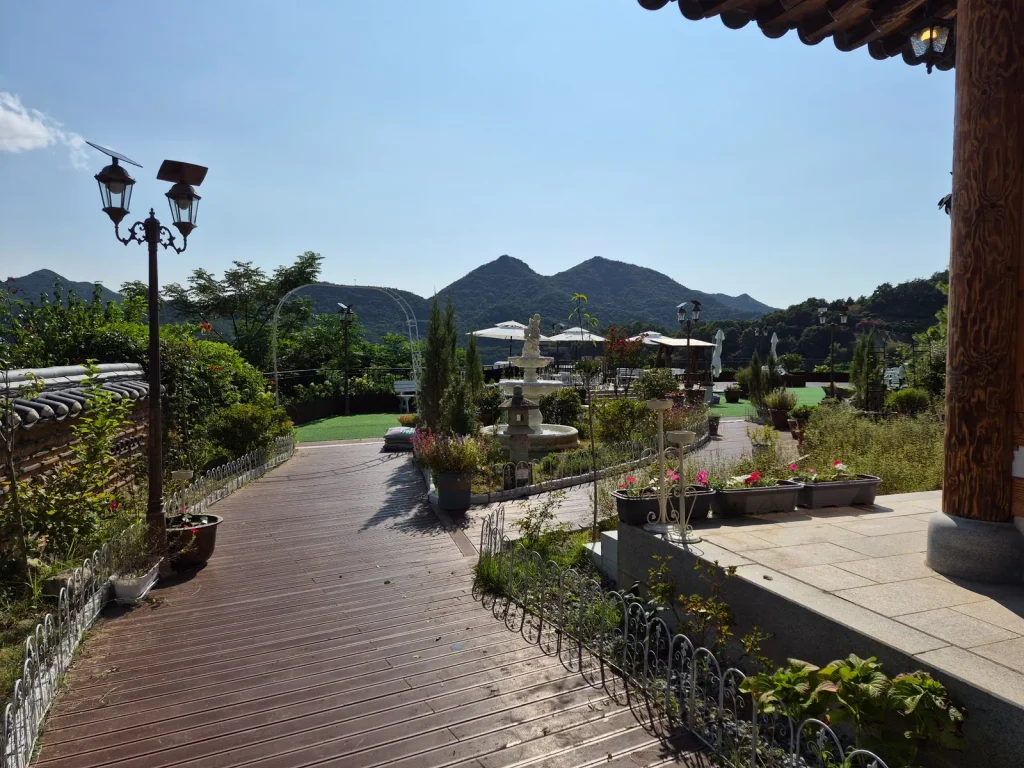
Cafe Dahwa also has a large outdoor area with tables, plants and seating.
From the garden, the hanok rooflines remain visible, but beyond them are the green mountains surrounding this part of rural Yeonggwang.
This is where the location becomes especially important.
Put the same cafe in the middle of a city and it would feel completely different.
Here, the hanok buildings, garden and mountains all belong to the same landscape.
It is a small example of the Korean countryside that many overseas visitors never see when their trip is focused mainly on Seoul, Busan or other large cities.
Old Appearance, New Purpose
One thing I have noticed in Korea is that traditional-style spaces are increasingly being used in modern ways.
A hanok can become a pension where travelers spend the night. Another can become a restaurant or cafe.
The result is an interesting mixture of old and new.
Traditional tiled roofs and heavy wooden beams remain visible, while inside you might find Wi-Fi, air conditioning, modern lighting and an espresso machine.
Cafe Dahwa reflects that contrast particularly well.
It does not require visitors to understand Korean architecture before coming here.
You can simply sit down for a drink.
But while you are there, the building itself quietly becomes part of the experience.
Another Side of Rural Korea
Places like Cafe Dahwa are one reason I enjoy showing rural Korea on this site.
The Korean countryside is not simply farmland and old villages.
It is changing.
Traditional architecture, tourism, cafes, pensions and everyday rural life increasingly exist side by side.
Cafe Dahwa is only one small place in Yeonggwang, but it shows something larger about modern Korea: old forms do not always have to disappear for new lifestyles to arrive.
Sometimes a cup of coffee beneath a wooden hanok roof is enough to see both at the same time.