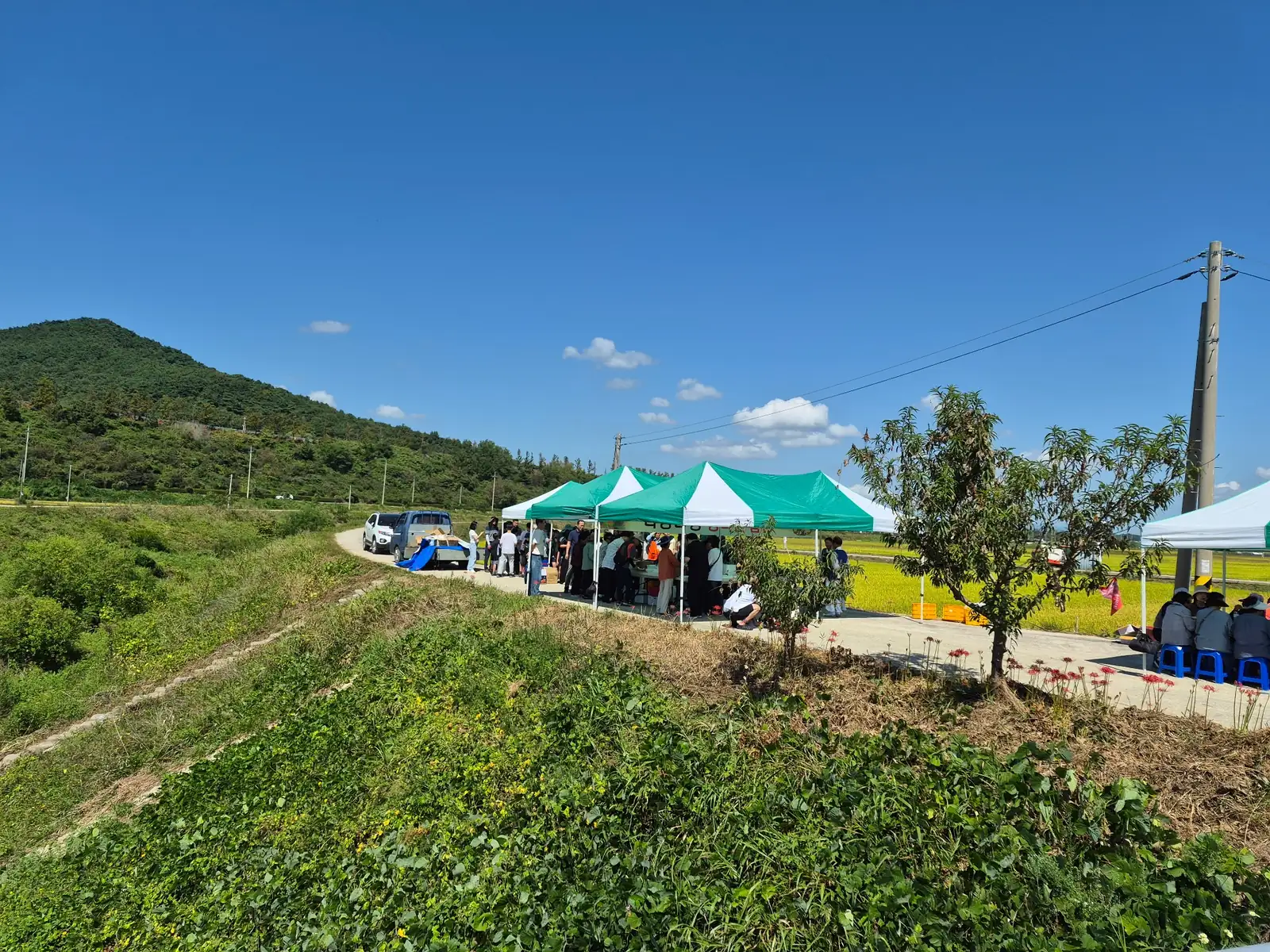
In Part 1, I introduced a rural harvest festival held among the rice fields of Myoryang, a small countryside community in Yeonggwang, South Korea.
But the landscape, the pungmul music, and the tractors were only part of the story.
What made this festival special was the people.
Elementary school children, parents, local residents, and elderly villagers all came together in the same place. Rather than separating activities by age, the festival gave different generations a chance to eat, play, and spend the day together.
A Festival for Every Generation
In a small rural community, a local festival can feel very different from a large city event.
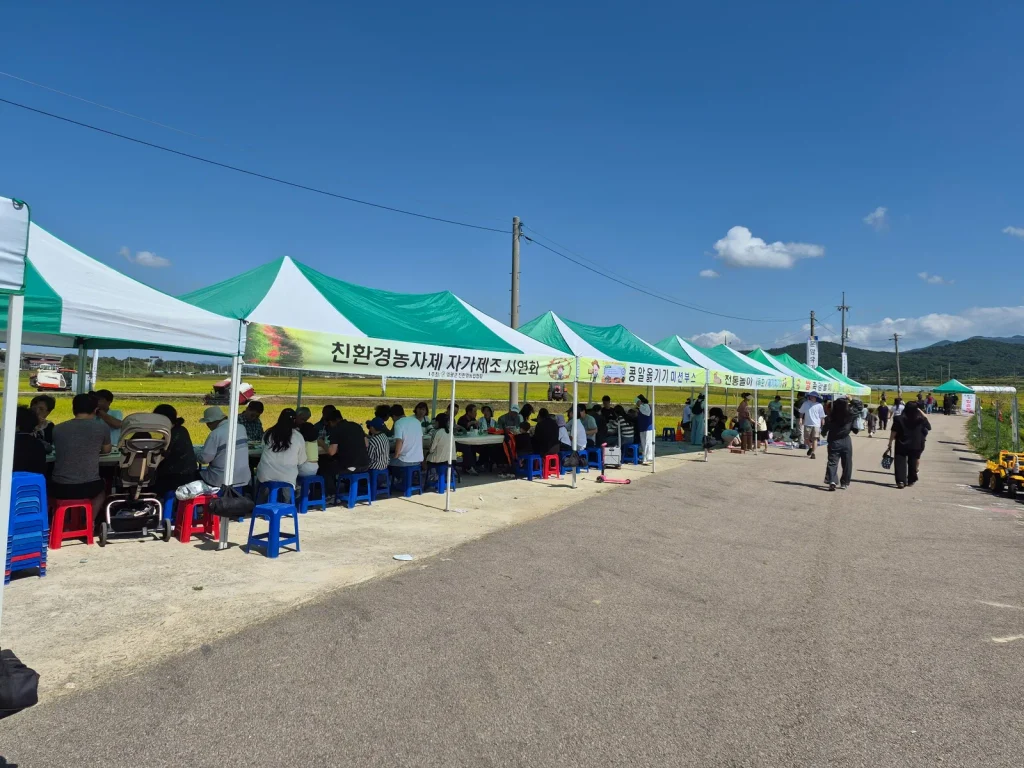
Here, the people attending were also the people who live in the area. Children ran between activities while parents watched nearby. Older residents sat together under the tents, eating, talking, and watching what was happening around them.
There was no single age group at the center of the day. From elementary school students to elderly villagers, the festival belonged to everyone.
Playing With Rice Instead of Sand
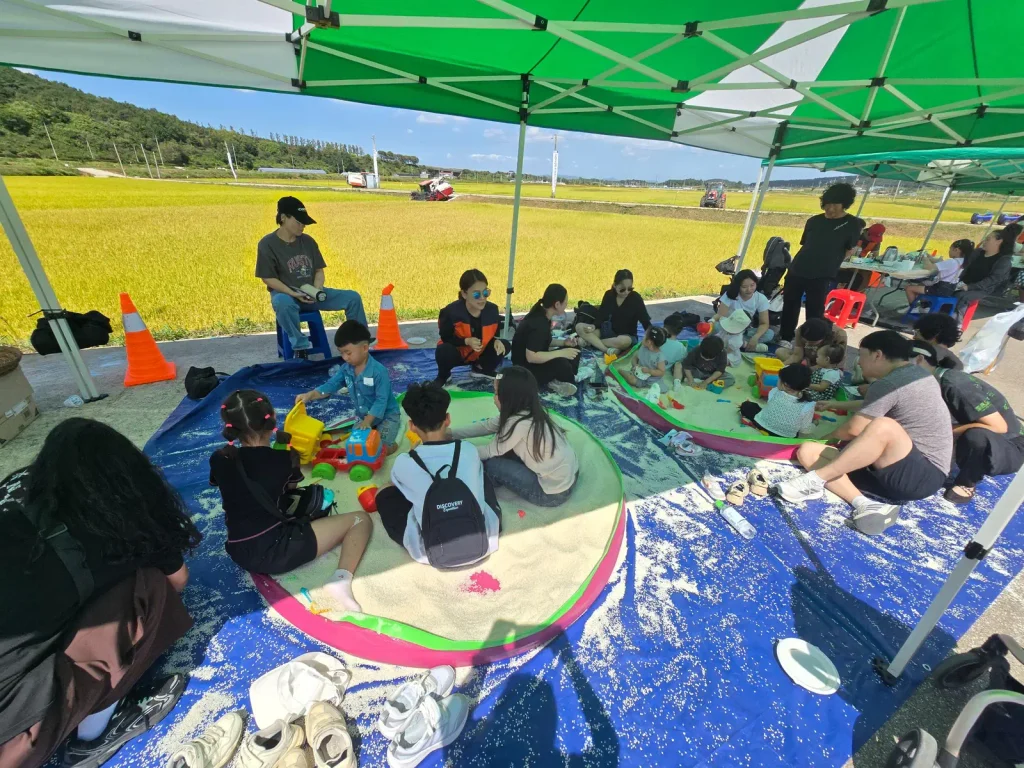
One of the most memorable activities for young children was surprisingly simple: playing with rice.
A large amount of rice was placed in a play area, and children could sit inside and scoop, pour, and dig through it almost as if they were playing in a sandbox.
For children growing up in a farming community surrounded by rice fields, it turned something they normally see as food or as a crop into something they could touch and explore with their hands.
Traditional Games, Rice Cakes and Small Challenges
There were many other activities throughout the festival.
One was tuho (투호), a traditional Korean game in which players try to throw sticks into a narrow container from a distance.
Another activity involved making chapssaltteok, or glutinous rice cakes. Participants took turns pounding the rice, and when the rice cakes were finished, everyone shared them.
There was also a surprisingly competitive chopstick challenge. Participants had 30 seconds to move 20 black beans using chopsticks. Those who completed the challenge received a small prize.
Other booths offered stamp art for children’s hands or faces, while another took photographs of visitors. About an hour later, participants could return and collect a printed copy of their photograph.
Not every activity needed to be complicated. Much of the fun came from trying something together.
Collecting Stickers Around the Festival
There was also a simple system encouraging visitors to explore the different activities.
Each time someone participated in an activity, they received a sticker on a festival card.
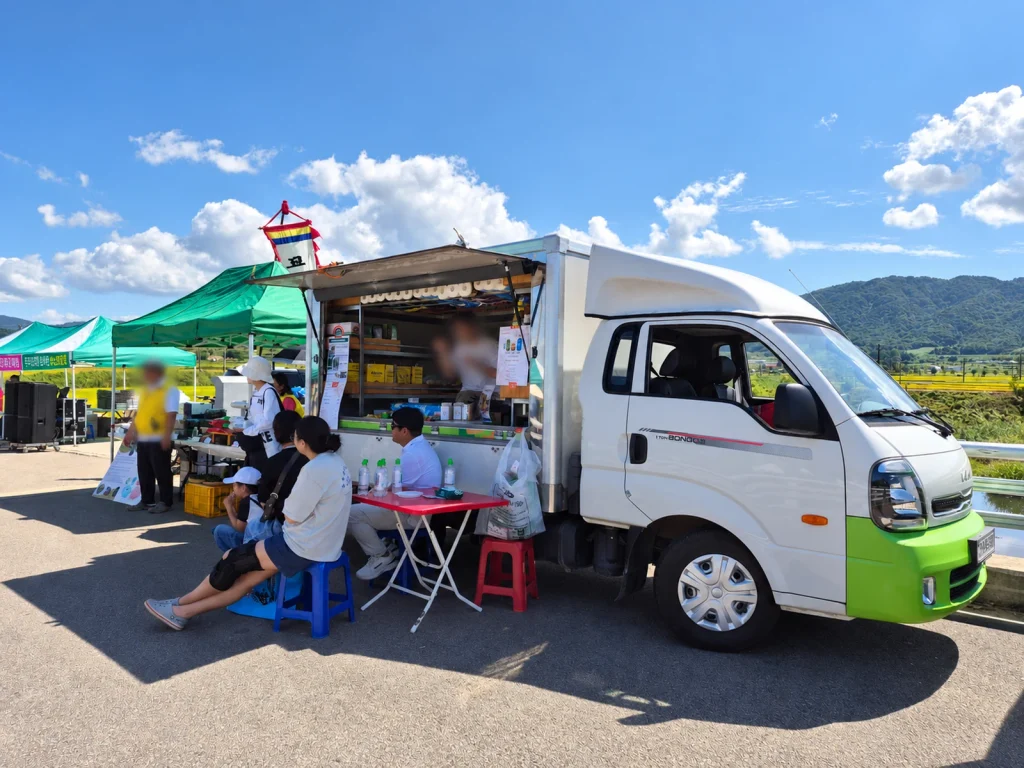
After collecting at least three stickers, they could take the card to a mobile shop called Dongnak Jeomppang (동락점빵) and receive a free drink.
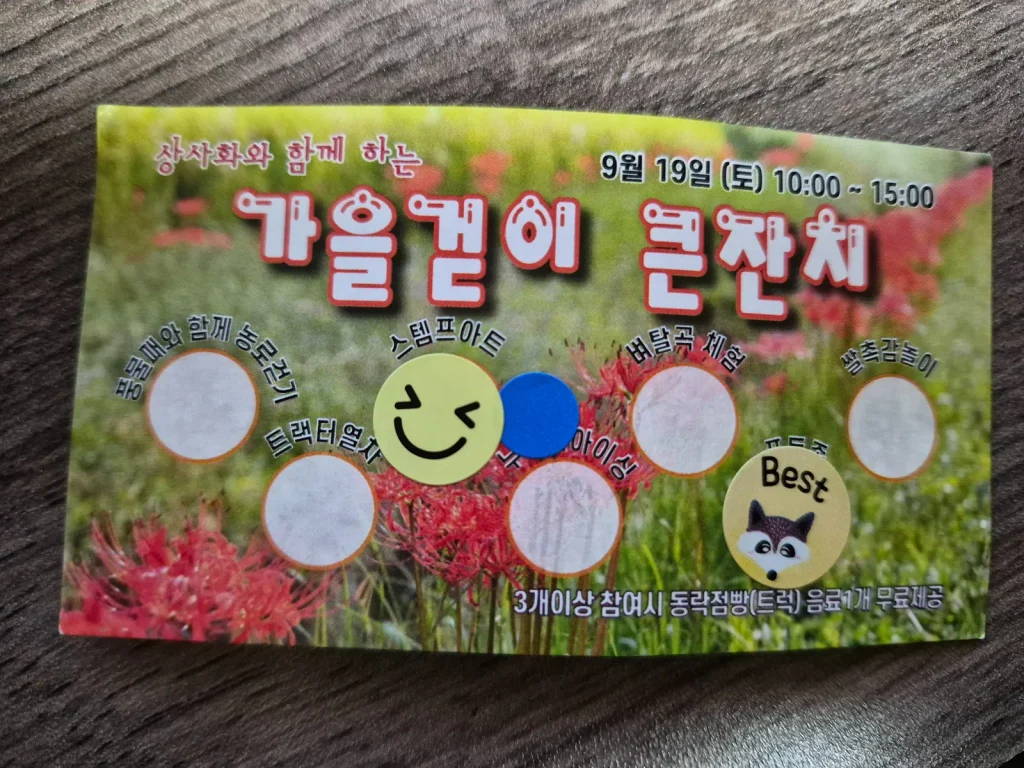
It was a small reward, but it gave children another reason to move from one activity to the next and experience different parts of the festival.
Lunch Was Something Everyone Shared
Around lunchtime, food was provided free of charge.
People lined up carrying large plates and chose food from a buffet-style serving area. After filling their plates, they found seats under the tents and ate together.
Children, parents, and elderly residents were all sharing the same meal in the middle of the countryside.
There was nothing formal about it. People simply found a place, sat down, ate, talked, and continued enjoying the festival.
That ordinary scene probably says more about a small rural community than any formal ceremony could.
Games With Real Prizes
The activities were not only for small children.
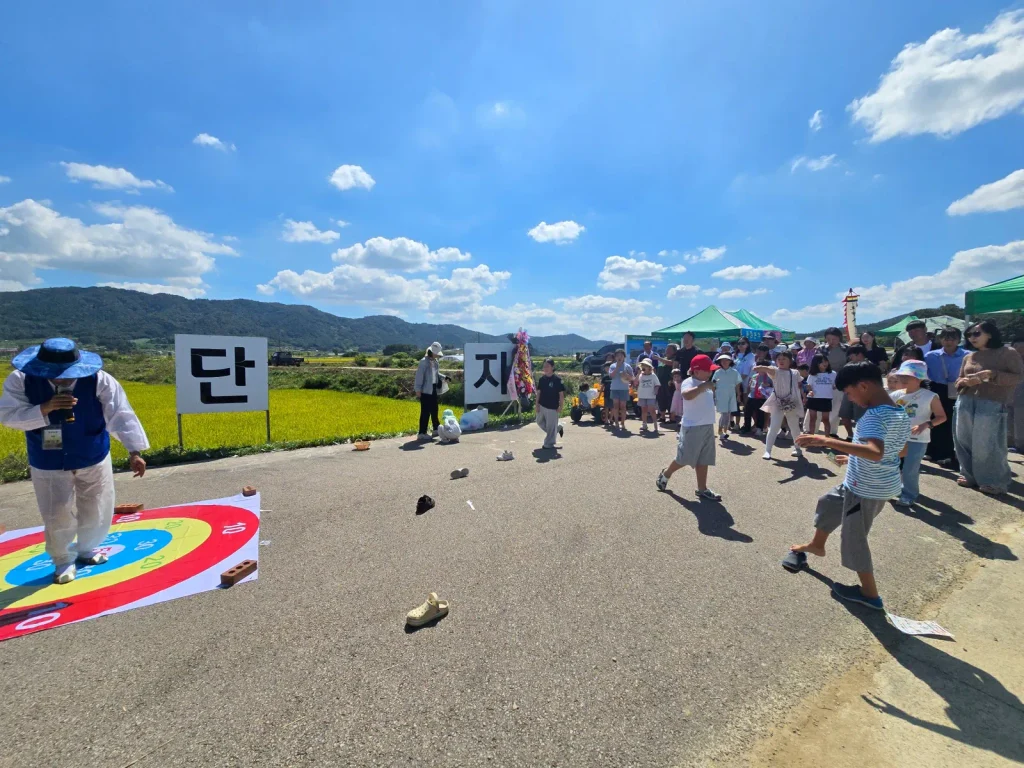
There were games that drew crowds of different ages, including a shoe-throwing game. Participants tried their luck while people around them watched and cheered.
Some winners received a full tray of eggs as a prize.
A tray of eggs might sound like an unusual festival prize to someone visiting Korea for the first time.
But at a local rural event, practical food prizes do not feel out of place at all. They are useful, familiar, and easy to take home and share with a family.
Going Home With the Harvest
The sharing continued until the end of the festival.
Two hundred people who had registered in advance received a gift box. Inside were newly harvested rice, glutinous rice, coarse salt, and sweet pumpkin.
These were not expensive souvenirs designed for tourists. They were foods people could actually take home and use.
And throughout the day, additional prizes were handed out through games and activities. By the end, it seemed as though gifts and prizes had found their way into the hands of people all around the festival.
There was something fitting about leaving a harvest festival carrying rice and other food from the countryside.
More Than a Festival
Large festivals can offer spectacular performances, elaborate stages, and huge crowds.
A small rural festival offers something different.
For one day, children, parents, farmers, and elderly neighbors shared the same road beside the rice fields. They played games, made rice cakes, ate lunch, collected stickers, won small prizes, and talked with people they already knew from everyday life.
The activities themselves were simple.
What mattered was that everyone was there together.
For me, that is one of the most interesting things about rural Korea. A harvest festival is not only a celebration of what has grown in the fields.
It is also a celebration of the community that lives around them.