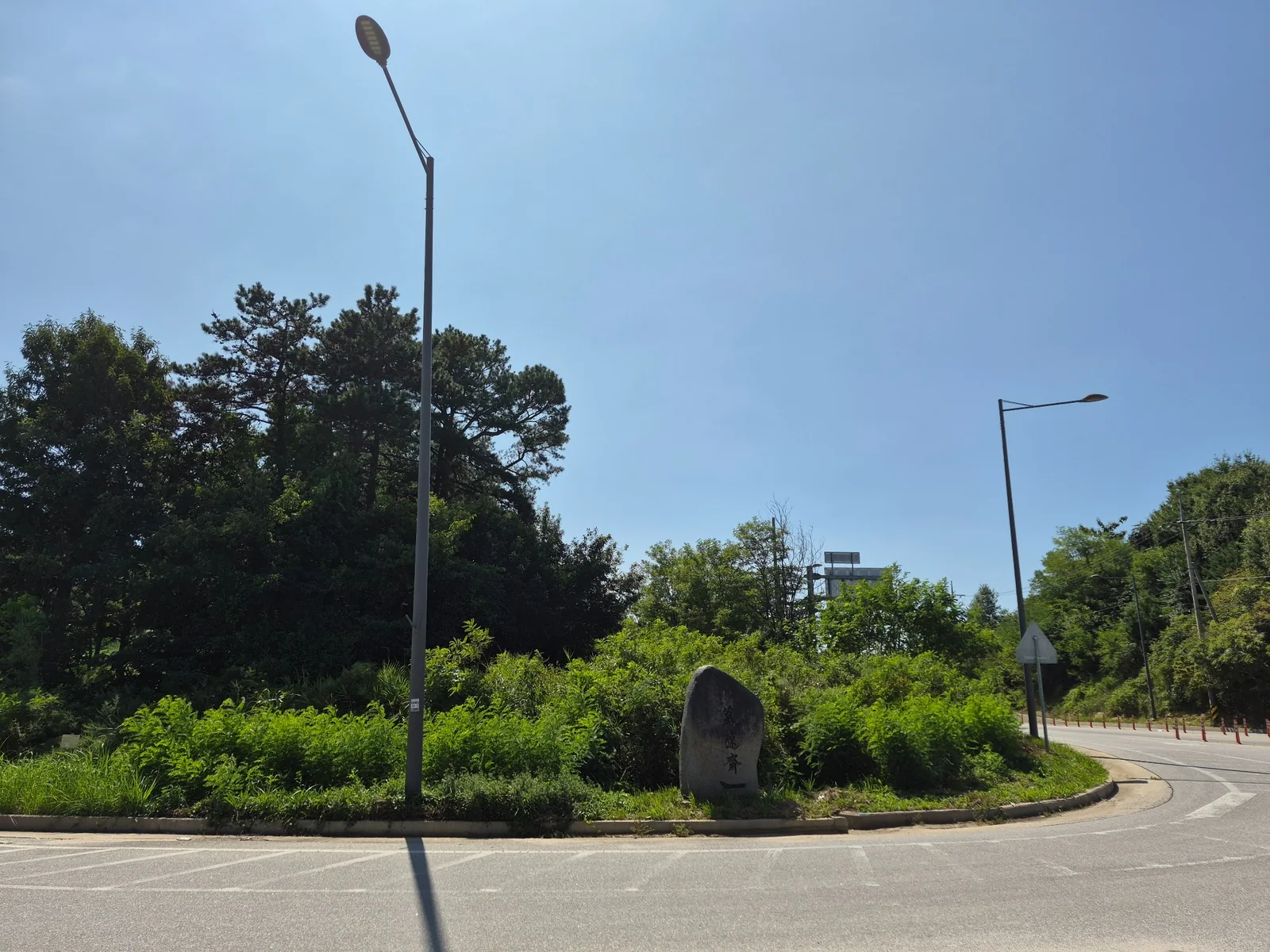
Drive through the Korean countryside, and you may notice something unusual at the entrance to a small village.
Beside the road, there is often a large stone.
A few Korean characters are carved into it.
At first, a foreign visitor might wonder what it is.
Is it a monument?
Does it mark a historical site?
Or does the stone have some religious meaning?
Often, the answer is much simpler.
It tells you the name of the village you are entering.
I live in Yeonggwang, a rural county in Jeollanam-do, and signs like these are a familiar sight when driving through the countryside.
They are so ordinary to people who live here that we may hardly notice them.
But if you are seeing rural Korea for the first time, they are one of those small details that can make the countryside feel very different from the city.
A Stone Sign at the Entrance to a Village
In rural Korea, a small road branching off from a larger road may lead to a cluster of homes.
There may not be a large commercial sign announcing that you have arrived somewhere.
Instead, you may see a stone standing beside the road with the village name carved into it.
The stone acts as a simple landmark.
Pass it, turn onto the smaller road, and you are entering the village.
A stone village name sign beside a rural road in Yeonggwang, South Korea.
They Do Not All Look the Same
One interesting thing about these village signs is that they are not all identical.
Drive from one village to another and the stones can change.
Some are tall and natural-looking.
Others are polished and carefully shaped.
The lettering can also be different.
Some village names are carved vertically, while others are written horizontally.
That means the sign can become a small visual identity for the village.
You may drive only a short distance and find another village with a completely different stone at its entrance.
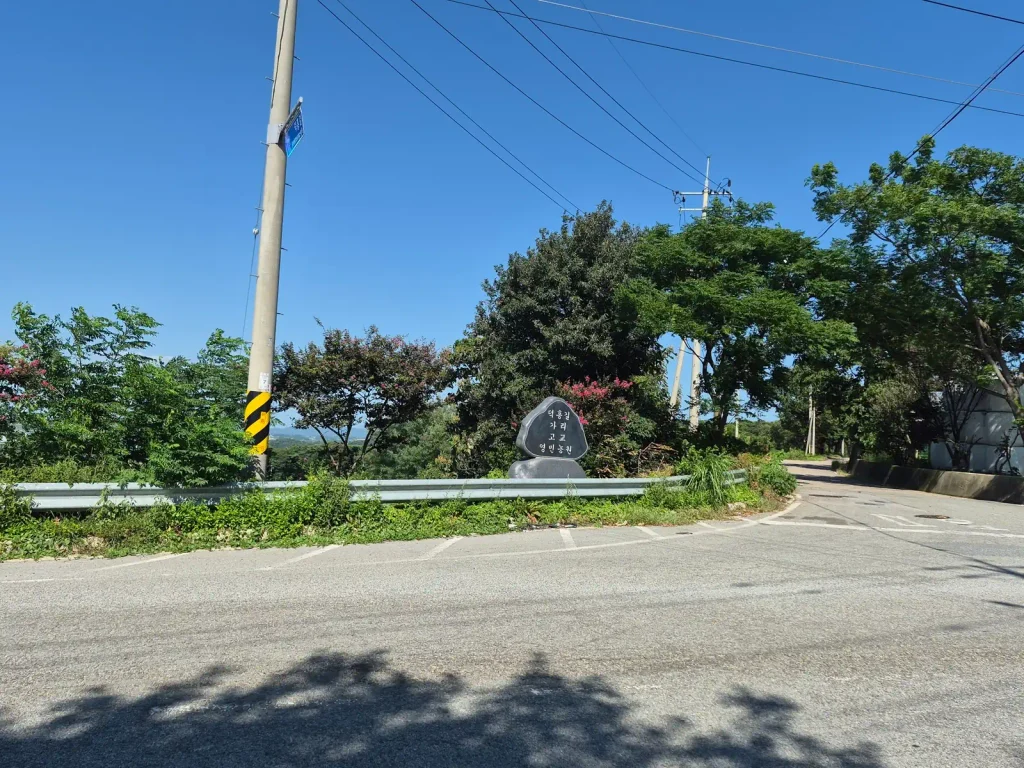
A village entrance marked by a stone sign in the countryside of Yeonggwang.
A Village Can Be Easy to Miss
This is something that may surprise visitors from large cities.
A rural Korean village does not necessarily begin with a dramatic entrance.
Sometimes there are only a few houses down a narrow road.
From the main road, you might see fields, trees, utility poles and a small road disappearing into the countryside.
Without the village name sign, a person passing through might not realize that a community is just beyond that road.
The stone quietly tells you:
There is a village here.
Old-Looking Stones Beside Modern Road Signs
Another detail I find interesting is the contrast around these village entrances.
You may see a stone with the village name carved into it.
Just above it, there can be a modern blue road-name sign.
Around it are utility poles, power lines and paved roads.
This combination is very typical of modern rural Korea.
The countryside is not a place frozen in the past.
Traditional-looking elements and modern infrastructure exist side by side.
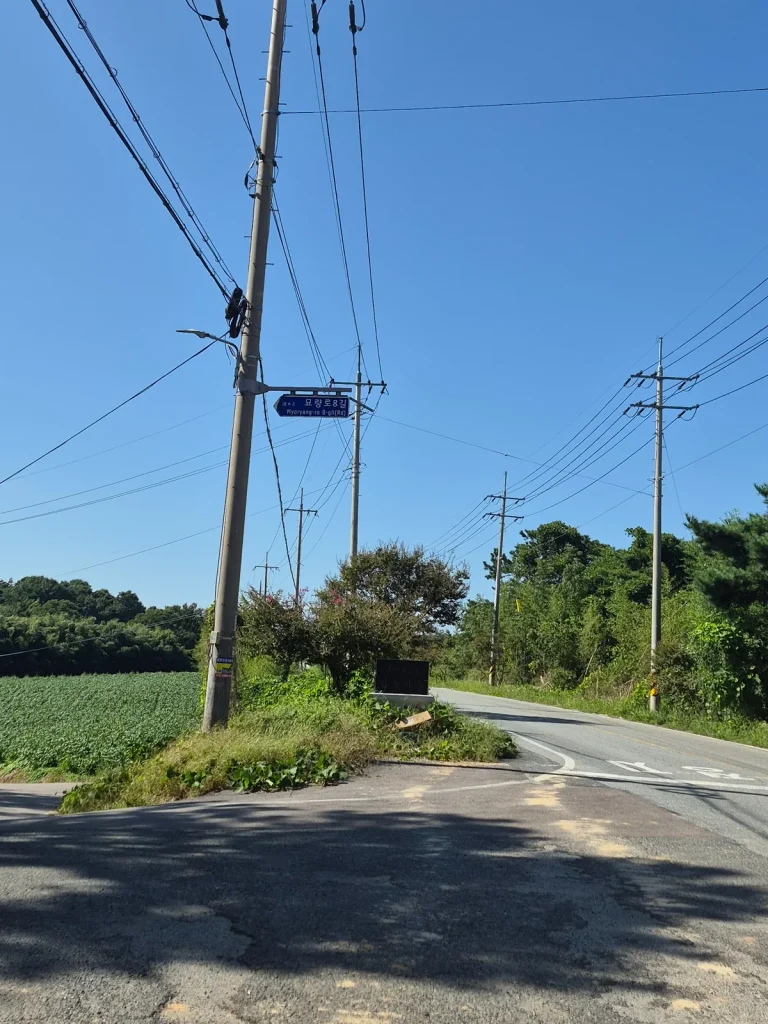
A stone village marker and a modern road sign standing together in rural Yeonggwang.
Village Names Matter in Rural Korea
In a large city, people often identify where they live by an apartment complex, street, subway station or neighborhood.
Rural areas can feel different.
Small villages have their own names, and those names remain useful when local people talk about places and communities.
That is why seeing a village name carved into stone feels appropriate.
It does more than tell a driver where to turn.
It gives a small community a visible place on the landscape.
Something Tourists Can Easily Miss
Most visitors to Korea would probably never plan a trip specifically to see a village stone sign.
And I would not suggest that they should.
The interesting part is noticing one while traveling through the countryside.
Slow down on a rural road and start looking around.
You may notice things that would never appear on a list of Korea’s famous attractions:
a narrow road leading into a village,
vegetable fields beside the road,
utility poles stretching across the countryside,
and a stone quietly displaying the name of a community.
None of these things are spectacular by themselves.
Together, however, they form the everyday landscape of rural Korea.
Rural Korea Is Full of Small Details
This is one reason I enjoy showing rural Korea on this blog.
Korea is often introduced through its biggest images:
Seoul’s skyline, K-pop, palaces, shopping districts and famous food.
Those things are certainly part of Korea.
But there is another Korea made up of much smaller details.
A local market.
An old rural house.
A quiet farm road.
And even a stone at the entrance to a village.
You could drive past all of them without thinking twice.
But once you begin noticing them, the Korean countryside starts to tell a different story.
Final Thoughts
The next time you travel through rural South Korea, look beside the smaller roads that branch away from the main road.
If you see a large stone with Korean writing carved into it, take a closer look.
It may simply be telling you the name of a village.
For the people who live nearby, it is an ordinary landmark.
For a visitor, however, it can be a small clue to understanding how rural Korea is organized and how individual villages maintain their own identity.
Sometimes, understanding a country begins with noticing the things that local people no longer notice.