When people think about the Korean countryside, they often imagine rice fields, mountains, and quiet village roads.
But there is something else that makes rural Korea interesting: the many different crops growing in the fields.
In Part 1 of this series, I shared our occasional morning walk to school. In Part 2, I showed the beautiful autumn scenery along the way.
For this final part, I want to take a closer look at the crops I see around our village.
Some of these plants are familiar to anyone who enjoys Korean food. Others were completely new to me when I moved to the countryside.
And what surprised me most was discovering that Koreans sometimes eat more parts of a plant than I had expected.
1. Korean Chili Peppers: More Than Just Spicy Food
One of the most noticeable crops in the autumn countryside is the chili pepper.
In Korean, chili peppers are called gochu (고추).
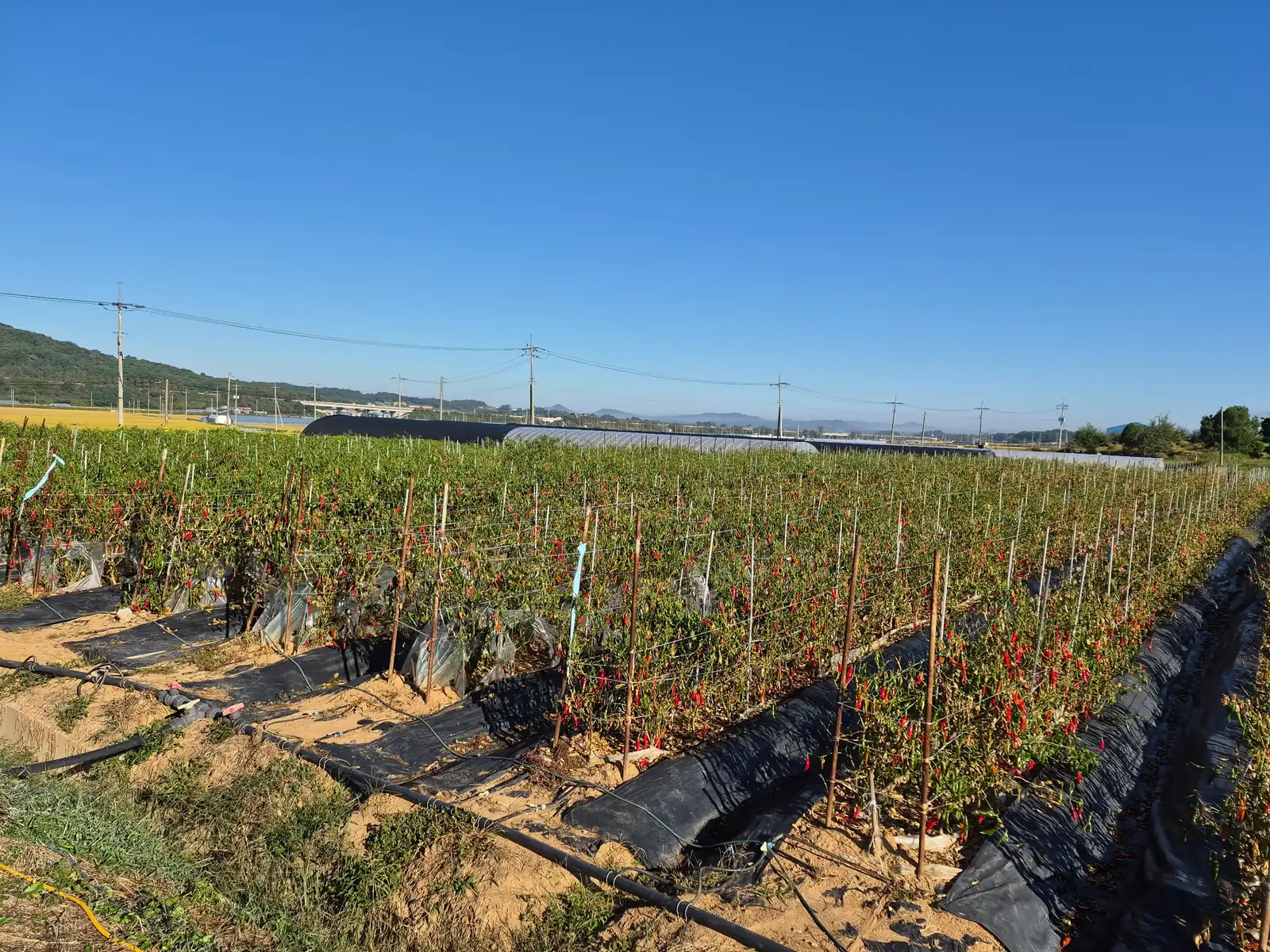
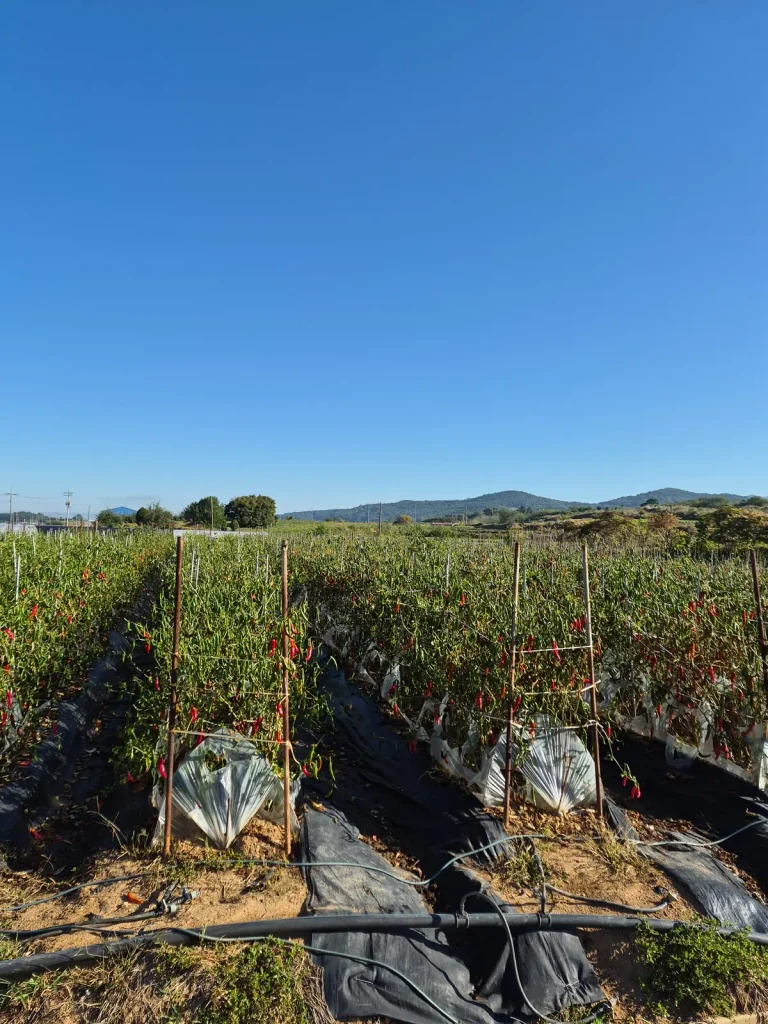
During my morning walk, I photographed a large pepper field with rows of plants supported by stakes and strings. Some peppers were still green, while others had turned bright red.
Green and red chili peppers are common ingredients in Korean cooking.
Green peppers can be eaten fresh, often with a dipping sauce. Red peppers are frequently dried and ground into gochugaru (고춧가루), the red pepper flakes used in kimchi and many other Korean dishes.
Living in the countryside, I also learned something interesting about how peppers grow.
People told me that peppers receiving less water can sometimes taste hotter.
There is some science behind this observation. Water stress can affect the production of capsaicinoids, the compounds responsible for chili pepper heat. However, the result also depends on the pepper variety, growing conditions, and severity of the stress.
So giving peppers less water does not automatically make them hotter, and severe water shortages can damage the crop.
Another surprising discovery was that Koreans do not eat only the peppers.
Tender chili pepper leaves and young shoots can also be blanched and seasoned to make a vegetable side dish called gochunnip namul (고춧잎나물).
It is a simple example of how Korean home cooking makes use of different parts of a plant.
2. Perilla Leaves: A Plant Used from Leaf to Seed
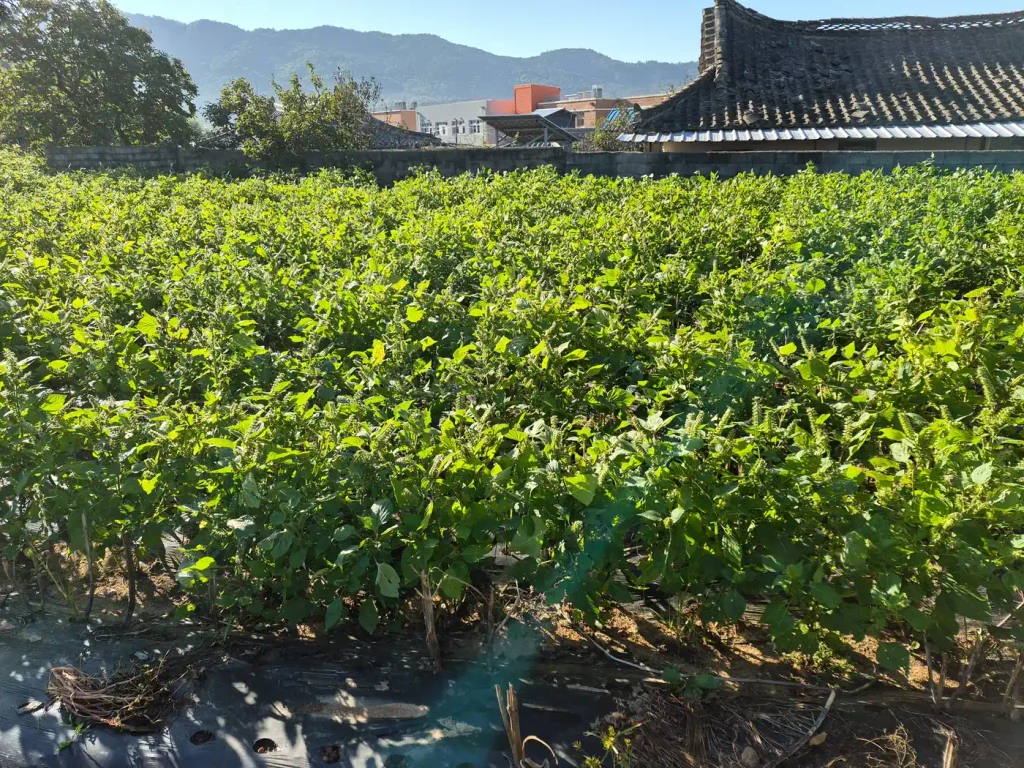
Another crop I often see in rural Korea is perilla.
Its leaves are called kkaennip (깻잎) in Korean.
Perilla leaves have a distinctive aroma that is difficult to describe until you taste them.
One of the most popular ways to enjoy them is to wrap grilled meat in a fresh leaf, sometimes together with rice, garlic, and sauce.
They can also be preserved in a seasoned soy sauce mixture to make kkaennip jangajji (깻잎장아찌), a flavorful side dish eaten with rice.
And just like chili pepper leaves, tender perilla leaves and young shoots can be blanched and seasoned as namul.
But the plant has another important use.
As the plants mature in autumn, farmers can harvest the seeds, called deulkkae (들깨).
These seeds are used to produce perilla oil (deulgireum, 들기름), while ground perilla seeds add a rich, nutty flavor to Korean soups and other dishes.
What I find fascinating is that the same plant provides fresh leaves, cooked greens, seeds, and oil.
3. Napa Cabbage and Young Radish: Getting Ready for Kimchi Season
As autumn progresses, vegetable fields begin to tell another story.
This is the time when many Korean households start preparing for gimjang (김장), the tradition of making and storing kimchi for the colder months.
In my area, some families begin their kimchi-making preparations around mid-November, depending on the weather and their schedules.
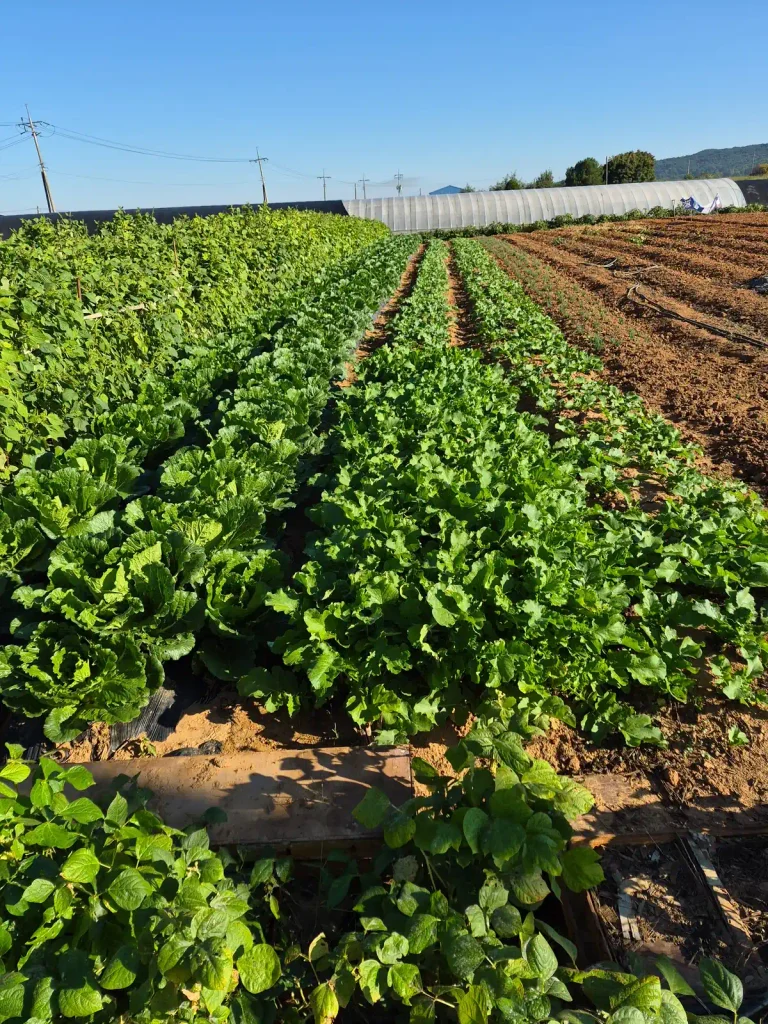
In one field, I photographed rows of napa cabbage and young radish greens.
Napa cabbage, called baechu (배추), is the main ingredient in one of Korea’s best-known types of kimchi.
The young radish greens, called yeolmu (열무), are also used to make yeolmu kimchi, a refreshing type of kimchi that is especially popular during warmer months.
Not every vegetable in the field is necessarily destined for winter kimchi, but seeing these crops growing in autumn reminds me that the kimchi-making season is approaching.
For many families, gimjang is about more than preparing food.
It can also be a time when relatives gather, share work, and prepare something that will be enjoyed over the following months.
4. Ramie Leaves: The Plant Behind Yeonggwang’s Famous Rice Cakes
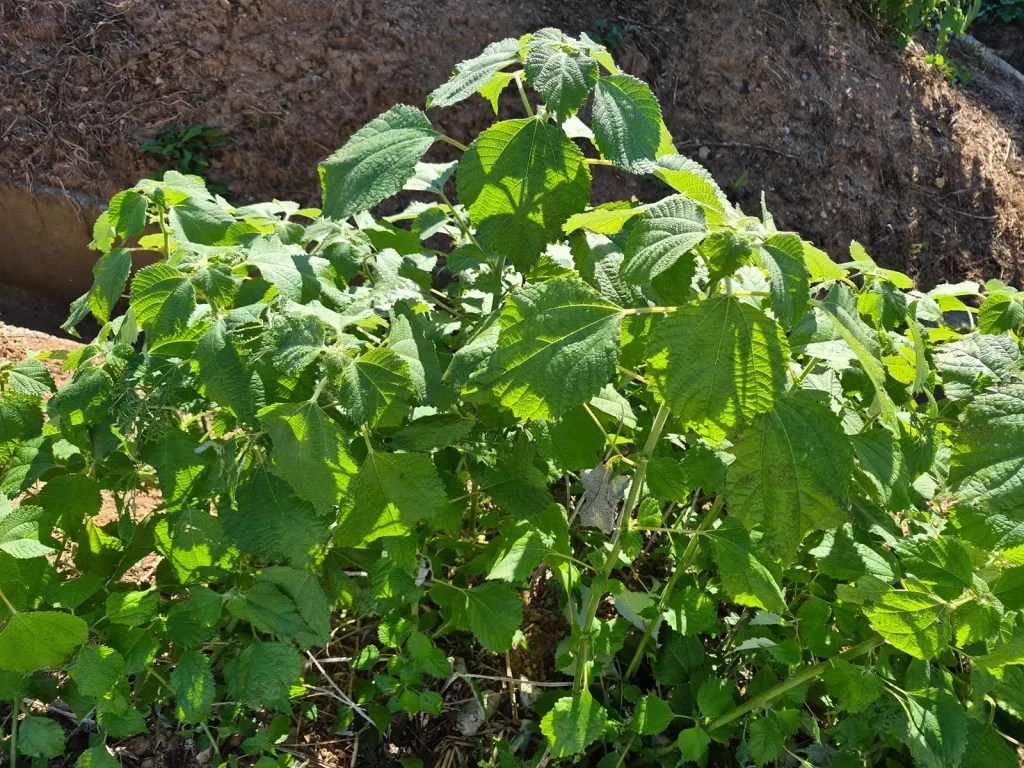
The last plant I want to introduce is one that I had never seen before moving to the countryside.
It is called mosi (모시), or ramie in English.
When I first saw its leaves, I thought they looked remarkably similar to perilla leaves.
Both plants have broad green leaves with serrated edges, so it is easy to understand why someone unfamiliar with them might confuse the two.
But they are different plants with different uses.
Ramie has traditionally been cultivated for its strong fibers, which can be used to make textiles.
Here in Yeonggwang, however, ramie is also closely connected to a famous local food: mositip songpyeon (모싯잎송편).
Songpyeon is a type of Korean rice cake, and Yeonggwang’s version is made using ramie leaves in the dough.
The leaves give the rice cakes their distinctive green color and are part of what makes this local specialty unique.
Before moving here, I knew about rice cakes, but I did not know that this particular plant was used to make them.
Seeing the actual ramie plant growing in the countryside helped me understand where this traditional food comes from.
That is one of the things I enjoy about rural life. Sometimes, a plant growing beside an ordinary road turns out to have a fascinating connection to local food and culture.
What These Fields Taught Me About Rural Korean Life
Before living in the countryside, I mostly thought about vegetables as ingredients I bought at a market.
Now, I sometimes get to see the plants themselves, growing in the fields before they reach someone’s kitchen.
I have learned that chili pepper leaves can become a side dish, perilla plants provide both leaves and seeds, and ramie leaves are used to make one of Yeonggwang’s famous rice cakes.
I have also come to appreciate the seasonal rhythm of farming.
In autumn, peppers ripen, perilla seeds mature, and cabbage fields grow toward the kimchi-making season.
These are ordinary sights for people who have lived in farming villages for many years.
But for someone like me, who moved to the countryside, they are still full of discoveries.
This brings my three-part series about our rural Korean school route to an end.
What started as a simple morning walk became a chance to share three different sides of rural life: the journey to school, the scenery along the road, and the food growing in the fields.
That is the Korea I hope to keep sharing through Korea Unfiltered: the everyday Korea that exists beyond the famous tourist attractions.