When people imagine rural Korea, they usually picture rice fields, mountains, old houses, and quiet village roads.
Those are certainly part of the countryside.
But rural life is not only about the landscape. People also need places where they can meet, learn, organize activities, and stay connected with their community.
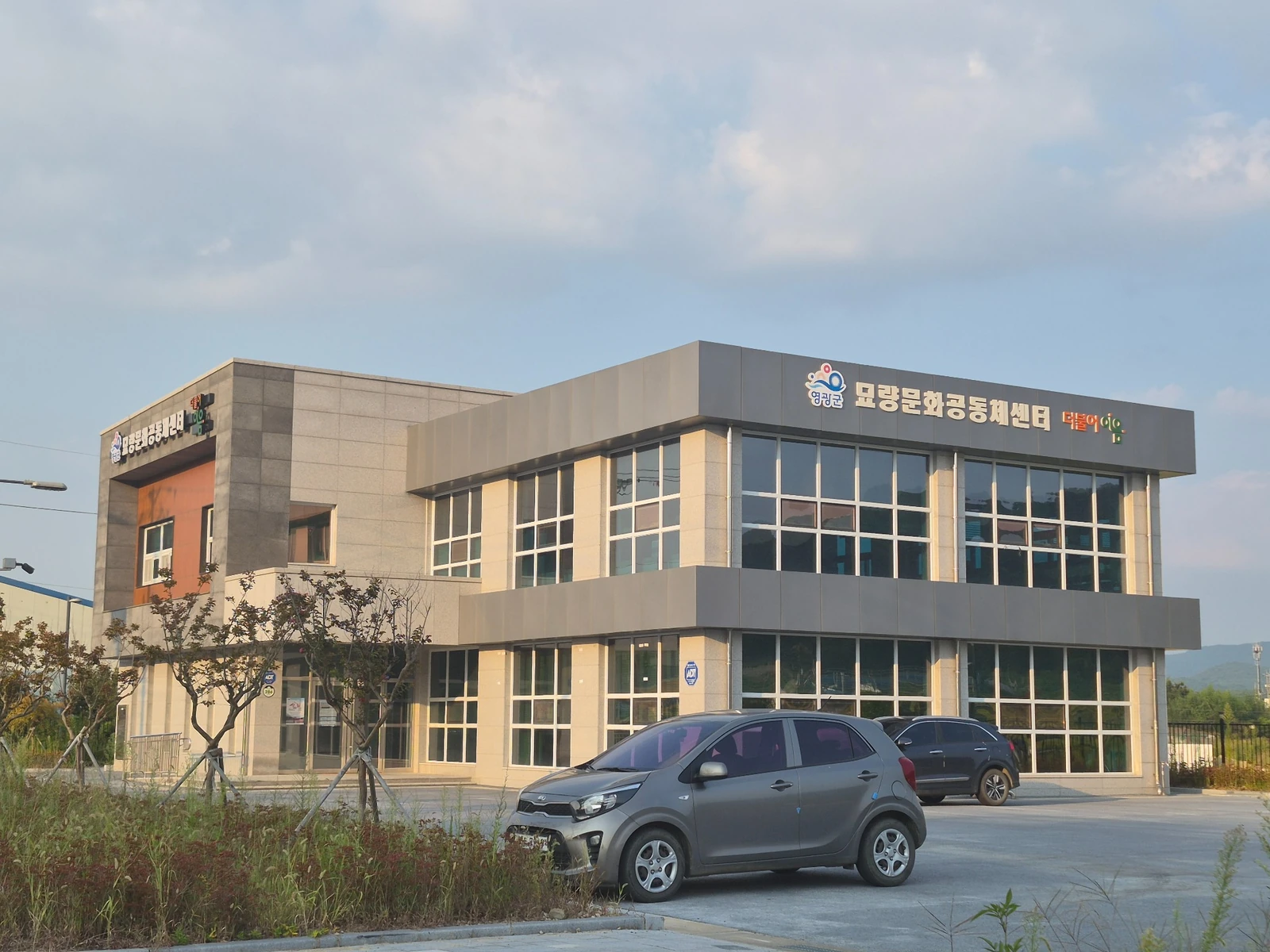
In Myoryang-myeon, a rural area of Yeonggwang County in Jeollanam-do, one of those places is the Myoryang Cultural Community Center.
It may look like a simple modern building from the outside, but the idea behind it tells us something interesting about how small communities in rural Korea are changing.
More Than Rice Fields and Mountains
Myoryang is not a large city.
It is a rural myeon, or township, in Yeonggwang County.
Official county material describes Myoryang as an agricultural area in eastern Yeonggwang, surrounded by mountainous terrain and traditionally centered on rice and barley farming. The township consists of a number of small villages rather than one dense urban center.
That geography is important.
In a city, people have libraries, cultural facilities, cafés, schools, sports centers, and other public spaces close together.
In the countryside, homes and villages can be spread across a much wider area.
A shared community space therefore has a different meaning.
Why Was This Center Built?
The Myoryang Cultural Community Center was part of a larger rural development project officially called the Myoryang-myeon Basic Living Hub Development Project.
According to Yeonggwang County’s official project notice, the project was planned from 2020 to 2023 with a total budget of approximately 4.299 billion won.
The project included three main areas: building the cultural community center, improving the local street environment, and strengthening residents’ community capabilities.
But the most interesting part is the stated purpose.
The county described the project as an effort to create a rural development hub that could use local strengths, support everyday life, and connect surrounding villages with a central community point.
In other words, the building was not planned simply because the area needed another building.
It was intended to become part of the infrastructure of rural life.
A Modern Building in a Rural Landscape
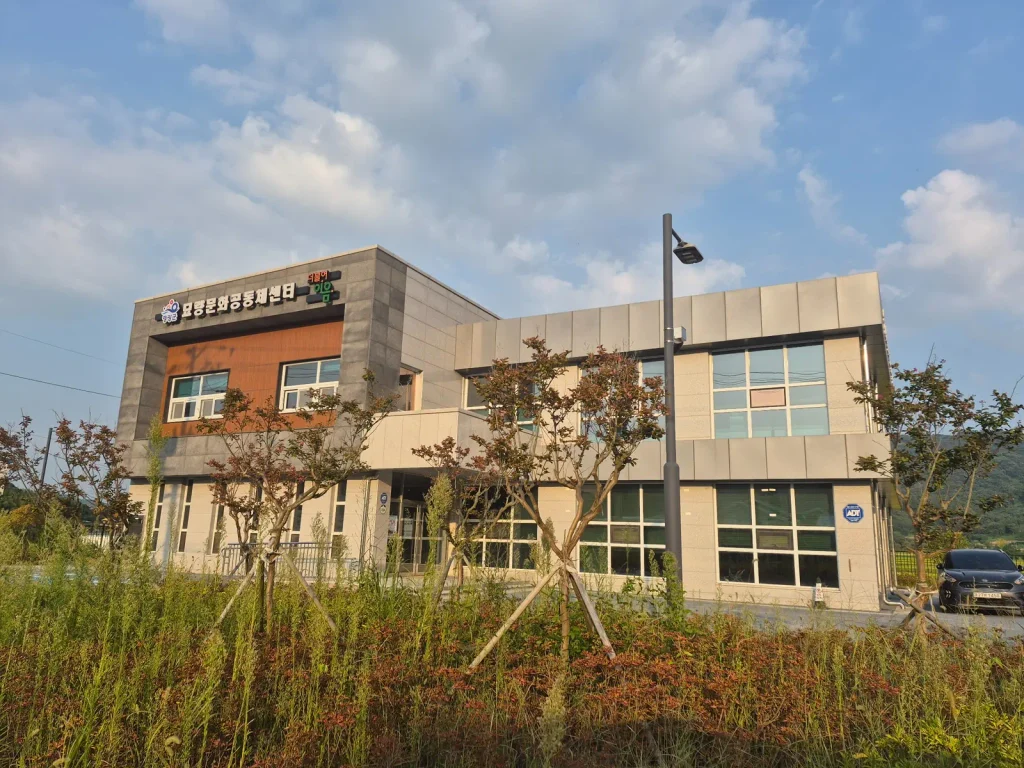
The building itself may surprise visitors who imagine that everything in rural Korea is old.
It is a modern two-story structure with large windows and a simple contemporary exterior.
That contrast is increasingly common in the Korean countryside.
Old village houses, rice fields, farms, modern homes, schools, cafés, and newer public buildings can all exist within the same rural landscape.
Rural Korea is not frozen in the past.
People here use modern facilities while continuing to live among farms, mountains, and small villages.
Why Community Spaces Matter in Small Rural Areas
One thing that is easy to misunderstand about rural Korea is the word village.
A rural township is not necessarily one cluster of houses where everyone lives within a few minutes of one another.
Myoryang itself contains many separate villages spread across the area. Official Yeonggwang County material records 18 administrative ri and 42 villages in the township.
That makes a central gathering place particularly meaningful.
A facility like this can provide a physical point where people from different parts of the area can come together.
And that is an important part of rural life that photographs of rice fields alone cannot show.
The countryside may look quiet from the road, but there is still a community behind that landscape.
What Does “Myeon” Mean in Korea?
The address also contains a Korean word that overseas visitors may not recognize: myeon (면).
South Korea has several levels of local administrative divisions.
A myeon generally refers to a rural township within a county, while individual villages within it are divided further into areas called ri (리).
So Myoryang-myeon is much more than the name of one tiny village.
It includes multiple rural communities within the wider Myoryang area.
Understanding words like myeon and ri makes many Korean countryside addresses—and even road signs—much easier to understand.
Rural Korea Is Changing
There is a tendency to imagine rural Korea in one of two ways.
One version is traditional: old houses, elderly farmers, rice paddies, and quiet villages.
The other is modern Korea: apartments, technology, cafés, and new buildings.
In reality, the two often exist side by side.
A farmer can spend the morning working in a rice field and later use a modern public facility nearby.
Children can grow up surrounded by farmland while still using modern community spaces.
An old village road may lead to a newly constructed building like this one.
That mixture is part of what rural Korea looks like today.
A Building That Tells a Bigger Story
The Myoryang Cultural Community Center is probably not somewhere an international traveler would put on a list of famous Korean attractions.
And that is exactly why I wanted to photograph it.
If you only visit major tourist destinations, it is easy to see Korea through palaces, shopping streets, famous cafés, and city skylines.
But everyday Korea also exists in places like this.
A small rural township still needs places for people to gather.
It needs connections between villages.
And it needs spaces that allow a community to continue doing things together.
The building itself is simple.
The story behind it is much bigger.
It is another small example of what life beyond Korea’s big cities actually looks like.