When people imagine public transportation in South Korea, they often picture Seoul.
There are crowded subway stations, buses arriving every few minutes, digital information screens, and busy stops filled with commuters.
But travel far enough into the Korean countryside, and public transportation begins to look very different.
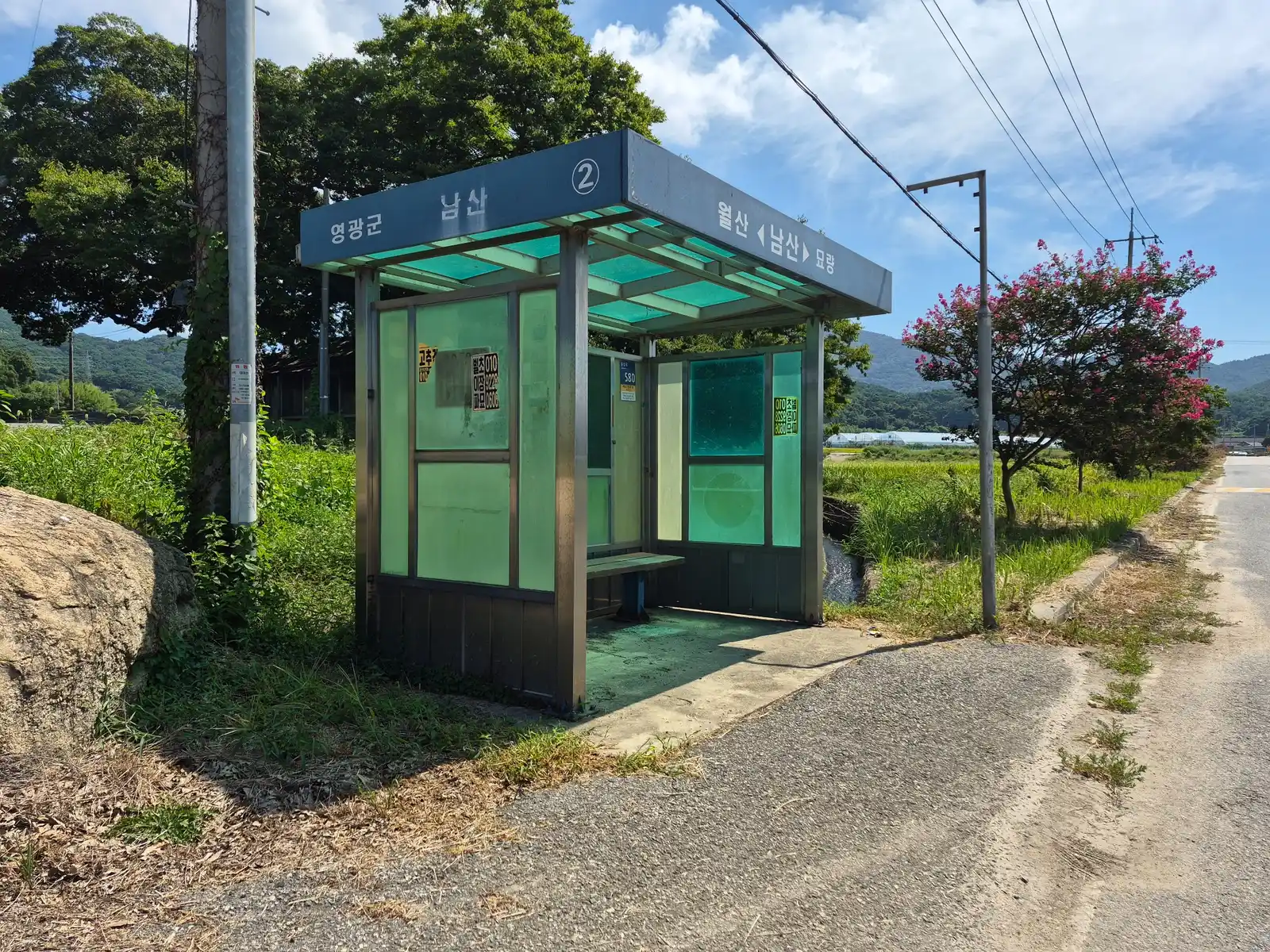
In small villages, you may find a simple bus shelter standing beside a narrow road, a rice field, or a quiet group of houses.
These small rural bus stops are easy to pass without noticing.
But for people who live in these villages, they are part of everyday life.
This is where local residents wait for a bus when they need to leave the village.
And when they return, this is often where they get off and walk back home.
A Bus Stop in a Small Korean Village
I live in Yeonggwang, a rural county in Jeollanam-do in southwestern South Korea.
Around small villages here, bus stops can look very different from the large transportation facilities visitors may see in Korean cities.
Some are little more than a roof, walls, and a bench.
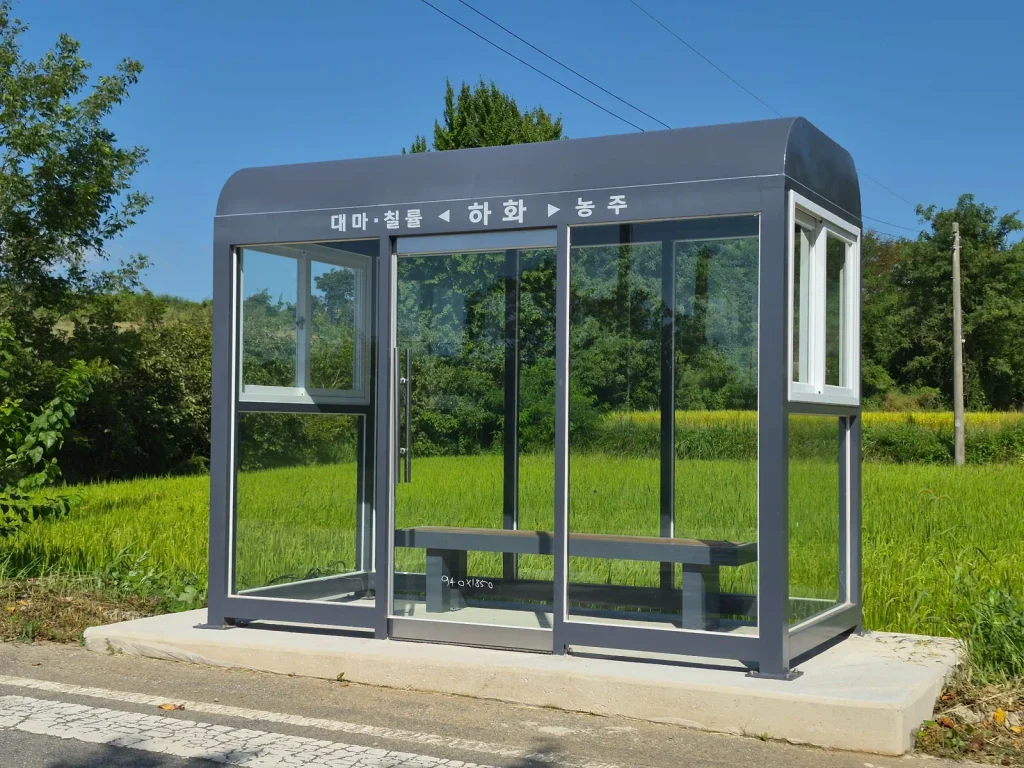
Others are newer glass shelters.
And some have clearly been standing beside the road for many years.
What they have in common is their location.
They are often surrounded not by apartment buildings and shops, but by fields, trees, narrow roads, and small villages.
A person waiting here may be one of only a few passengers at the stop.
But that does not make the stop unimportant.
This Is Where Villagers Leave—and Return Home
The easiest way to understand these bus stops is not to think of them as tourist infrastructure.
They are part of local life.
People from small villages come to these stops to catch local buses that connect them with larger settlements and other places along the route.
They may need to go shopping, visit a market, attend an appointment, take care of personal business, or make another connection.
Later, the bus brings them back.
They get off at the same small stop and make their way home again.
For someone driving through the countryside, the shelter may look almost empty and insignificant.
For someone living nearby, it can be the place where a journey away from home begins and ends.
A small rural bus stop is one of the places that connects a village to the world outside it.
Not Every Rural Bus Stop Looks the Same
There is no single design for a Korean rural bus stop.
Even within the same general area, the differences can be surprisingly noticeable.
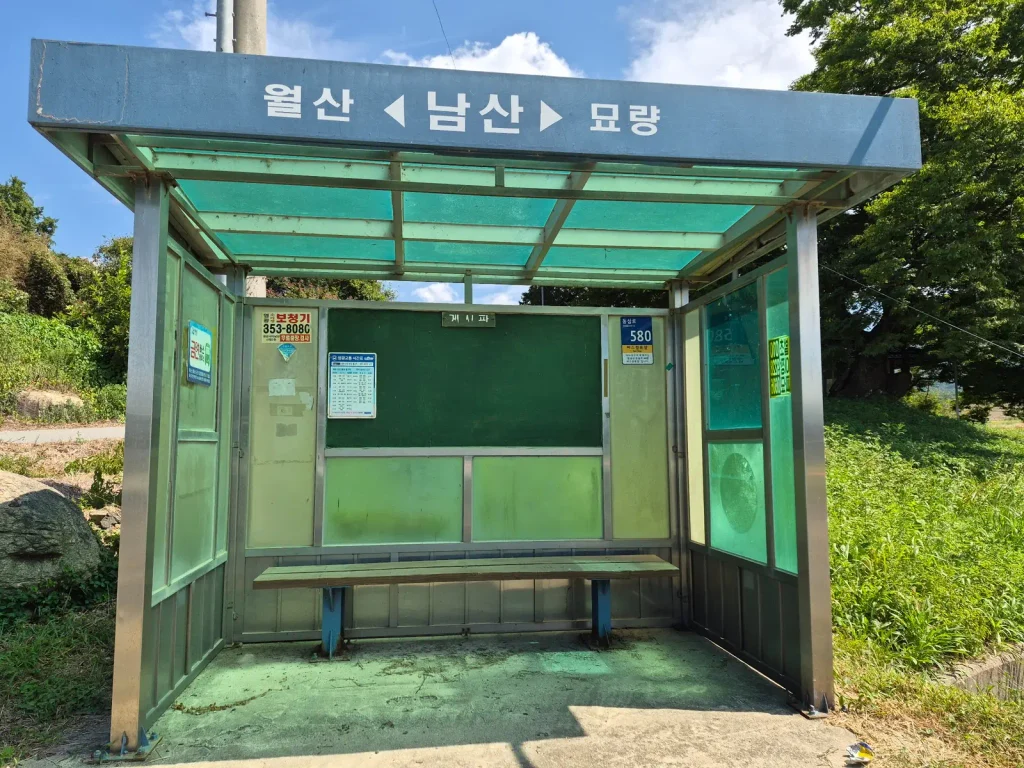
Some older shelters are made from metal frames and translucent panels, with a simple bench inside.
Others have been replaced or renovated with large glass walls and a cleaner, more modern design.
The newer shelter in these photos looks almost like a small glass room standing beside a field.
The older ones show their age through faded surfaces, worn benches, and older construction.
Yet both serve the same basic purpose:
a place to wait for the bus.
This mixture of old and new is something you see frequently while traveling through rural Korea.
These Are Different From the Big Bus Stops
It is also important to understand that the bus stops in these photographs are not the main transportation centers of the region.
Korean towns and counties can also have larger bus stops or terminals where more buses, routes, and passengers come together.
Those places are much easier for a visitor to recognize as part of a transportation network.
The stops shown here are different.
They sit closer to individual villages and small rural communities.
A local bus passes through, residents get on or off, and then the road becomes quiet again.
That difference matters.
If you only visit a large terminal, you see how people travel between larger places.
At a small village bus stop, you see how people living farther out in the countryside connect their homes to that larger transportation network.
Public Transportation Matters Differently in Rural Korea
Public transportation in rural areas faces challenges that are different from those in major cities.
Population density is lower, destinations are farther apart, and there may be fewer potential passengers along a route.
For people who do not drive, however, these local buses can still provide an important connection between their village and nearby towns.
That helps explain why a bus shelter that appears almost unused can still matter.
Its importance cannot always be measured by how many people are standing there at one moment.
For a resident who needs the bus that day, the stop has a very practical purpose.
Sometimes the Bus Stop Tells You Where You Are
Another interesting detail is written directly on the shelters.
Look closely at rural bus stops in Korea and you may see the names of nearby villages or destinations written across the top.
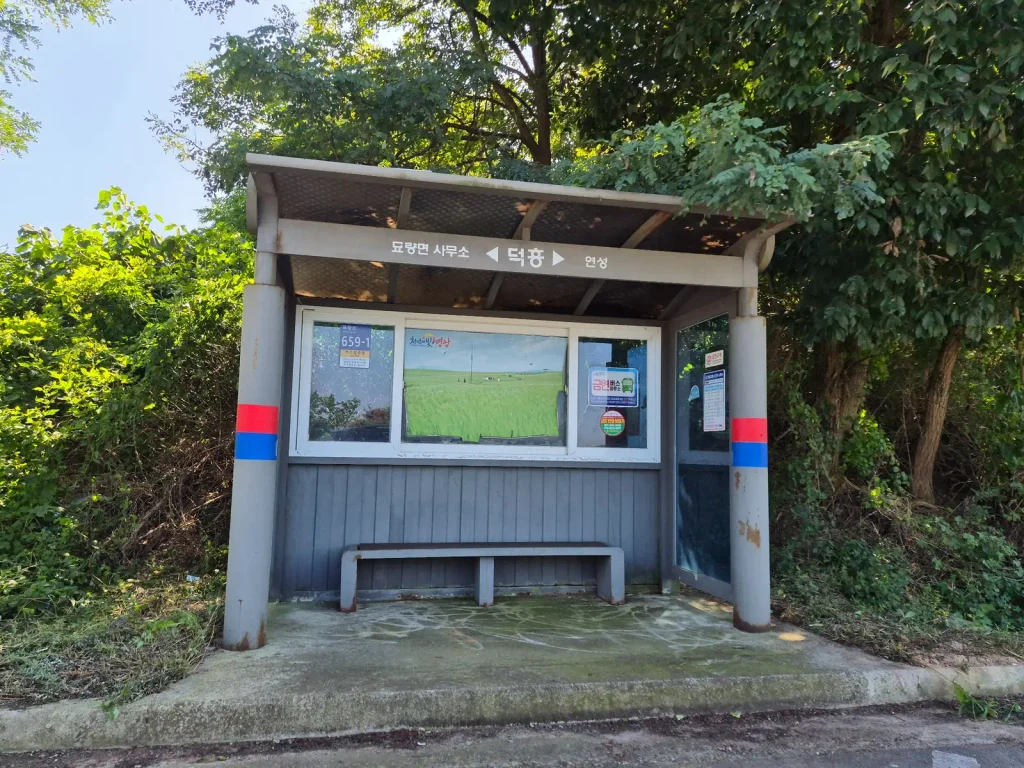
The stops in these photographs include names such as Namsan, Myoryang, Deokheung, Yeonseong, Hahwa, and Nongju.
For a local resident, these names are completely ordinary.
They are simply places along familiar roads.
For a foreign visitor, however, they reveal something that is easy to miss on a map of South Korea.
The countryside is filled with small communities, each with its own name and its own connection to the surrounding area.
A bus stop can quietly show you that geography.
Waiting Beside Rice Fields and Trees
Perhaps the most striking difference is the setting.
One of the newer bus shelters in these photographs stands directly beside green fields.
Another older shelter sits beneath large trees.
There are no crowds around them.
There is no subway entrance nearby.
There may not even be a convenience store within sight.
This is public transportation in a very different environment from central Seoul.
The basic idea is still exactly the same: wait, get on, travel, get off.
Only the landscape around it has changed.
An Ordinary Part of Korea That Tourists Rarely Notice
Most travelers would probably never plan a trip around a rural bus stop.
They shouldn’t.
These are ordinary pieces of infrastructure, not tourist attractions.
But that is exactly why I find them interesting.
Korea is not only palaces, K-pop, cafés, skyscrapers, and famous tourist destinations.
It is also made up of thousands of ordinary places used by people going about their everyday lives.
A weathered bench beside a country road can tell you something about how people live.
So can a timetable attached to an old shelter.
So can a small bus arriving to pick up someone from a village that most international visitors will never know exists.
Final Thoughts
A rural bus stop may be one of the easiest things to overlook while traveling through the Korean countryside.
Some are old.
Some are new.
Some stand beside fields, while others are hidden among trees or near small groups of houses.
But their purpose is simple.
People from the village come here to leave, and they come back here when they return home.
Larger bus stops and terminals connect towns and regions.
These smaller stops help connect the villages in between.
They may not be famous, beautiful, or important enough to appear in a travel guide.
But they are part of the real Korea.
And sometimes, the most ordinary places tell us the most about how everyday life actually works.