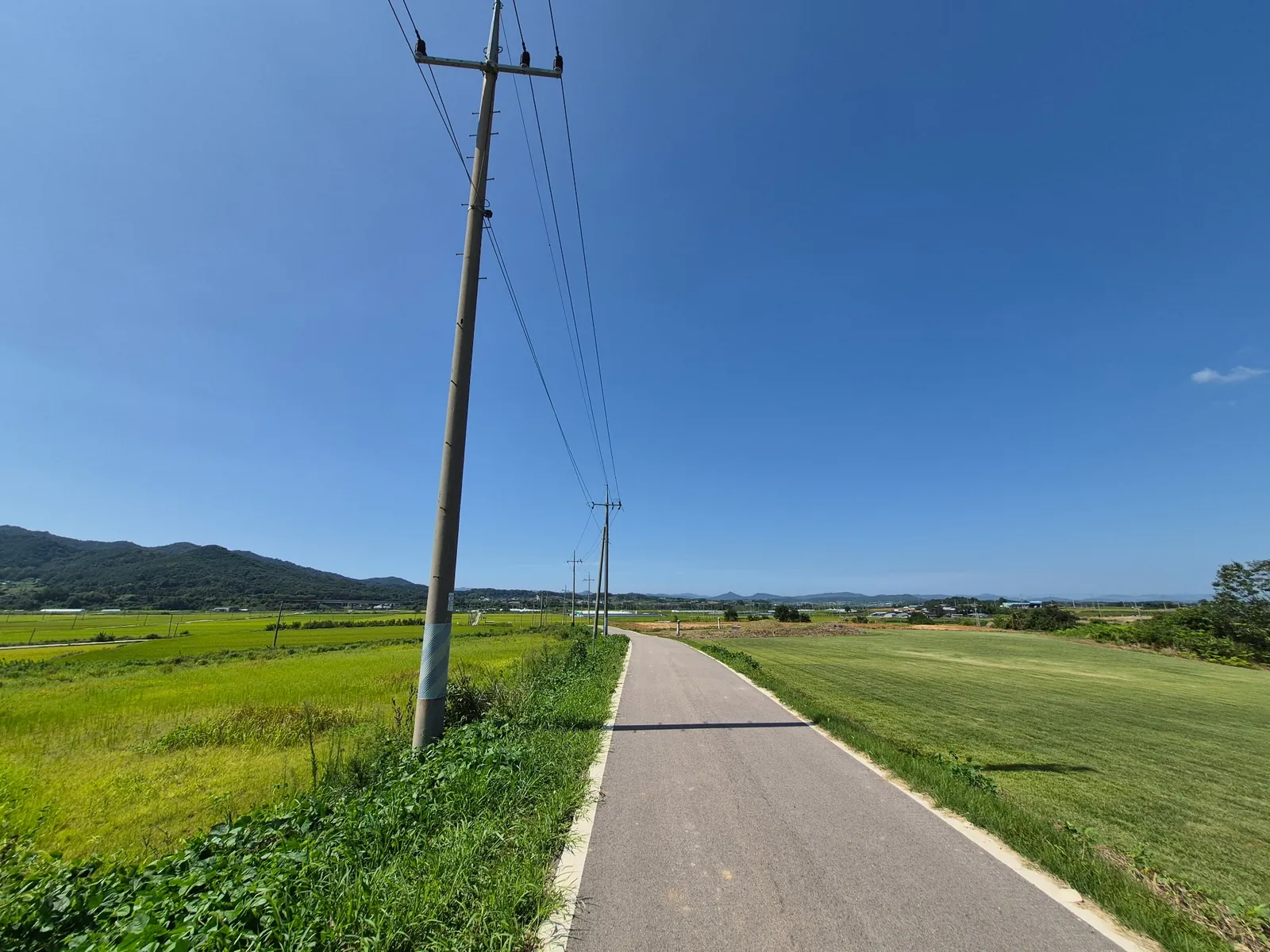
When many people think of South Korea, they imagine Seoul, K-pop, busy shopping streets, modern skyscrapers, and crowded tourist attractions.
That is certainly one side of Korea. But it is not the whole country.
Travel away from the major cities, and Korea begins to look very different. Roads become quieter, buildings become fewer, and rice fields and farmland start to fill the landscape.
I live in Yeonggwang, a rural county in Jeollanam-do in the southwestern part of South Korea. The Korea I see every day is often very different from the Korea shown in travel videos.
There are no crowds of tourists here. Instead, there are narrow country roads, farms, small villages, mountains, and people simply going about their everyday lives.
This is the quiet side of Korea that many tourists rarely see.
A Different Korea Beyond the Big Cities
Seoul is one of the largest and busiest cities in the world. It has an excellent transportation system, countless restaurants, shopping districts, and entertainment areas.
But once you travel into the Korean countryside, the atmosphere changes quickly.
Traffic becomes lighter. Small roads run between rice fields. Mountains appear in almost every direction, and houses are often scattered between farms rather than packed closely together.
In some places, you can travel along a road and see very few people or cars.
For someone who has only experienced Seoul or other large Korean cities, this can feel like a completely different country.
Everyday Landscapes Tourists Rarely See
One of the most noticeable things about rural Korea is how much of the landscape is connected to agriculture.
Rice fields, vegetable farms, greenhouses, irrigation channels, and small agricultural roads are common sights.
These places are not tourist attractions.
They exist because people live and work here.
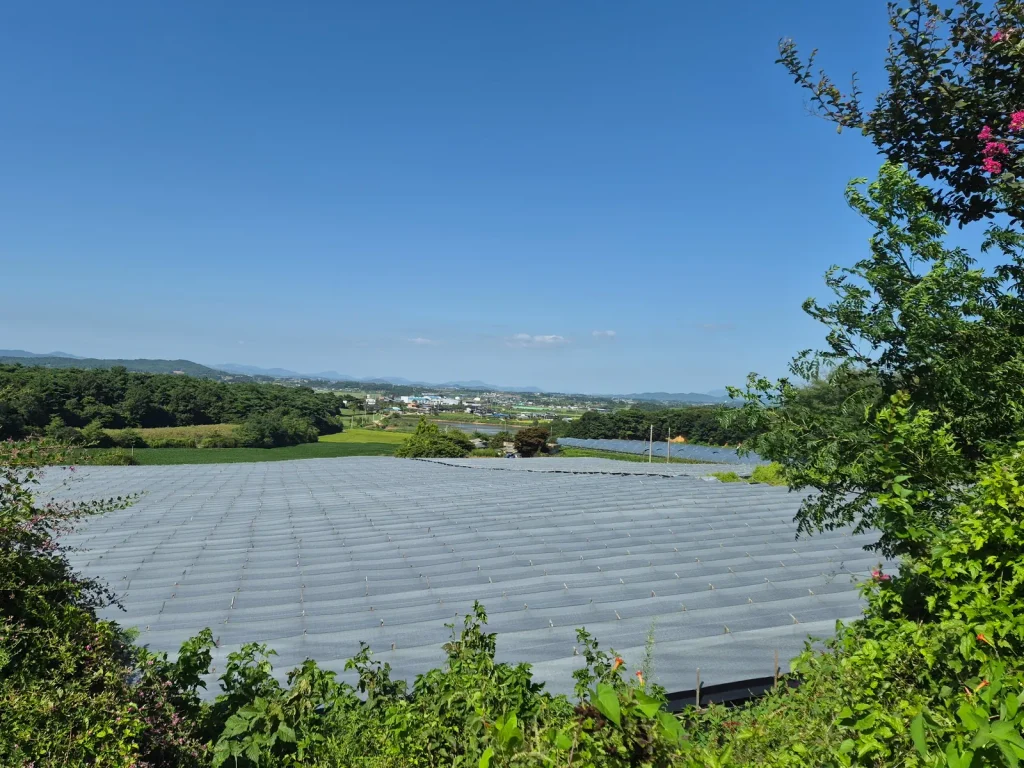
Farmland stretching across the countryside of Yeonggwang, South Korea.
For local residents, these landscapes are simply part of everyday life.
Depending on the season, the view can change dramatically. Fields that look empty in winter can become bright green during the growing season. Later, rice fields gradually turn golden as harvest time approaches.
Because farming is so closely connected to the seasons, rural Korea never looks exactly the same throughout the year.
Life Moves at a Different Pace
Another difference is the pace of everyday life.
In a large city, there is almost always something happening. Cars, buses, subways, shops, and crowds create constant movement.
Rural areas can be much quieter.
There are times when a small road may remain almost empty for long periods. At night, some villages become extremely quiet compared with cities.
That does not mean that people in rural Korea have nothing to do.
Farmers can be extremely busy, especially during planting and harvest seasons. People may start work early in the morning and continue until late in the day.
The difference is that much of this activity happens away from crowded streets and commercial districts.
Farming Is Still Part of Modern Korea
Visitors sometimes imagine rural life as something old-fashioned, but modern Korean agriculture is not simply a picture of the past.
Farmers today use tractors, agricultural machinery, greenhouses, irrigation systems, and many other technologies.
Some farms are small family operations, while others can be much larger and more specialized.
At the same time, older farming landscapes still exist alongside modern equipment.
That mixture of old and new is one of the interesting things about rural Korea.
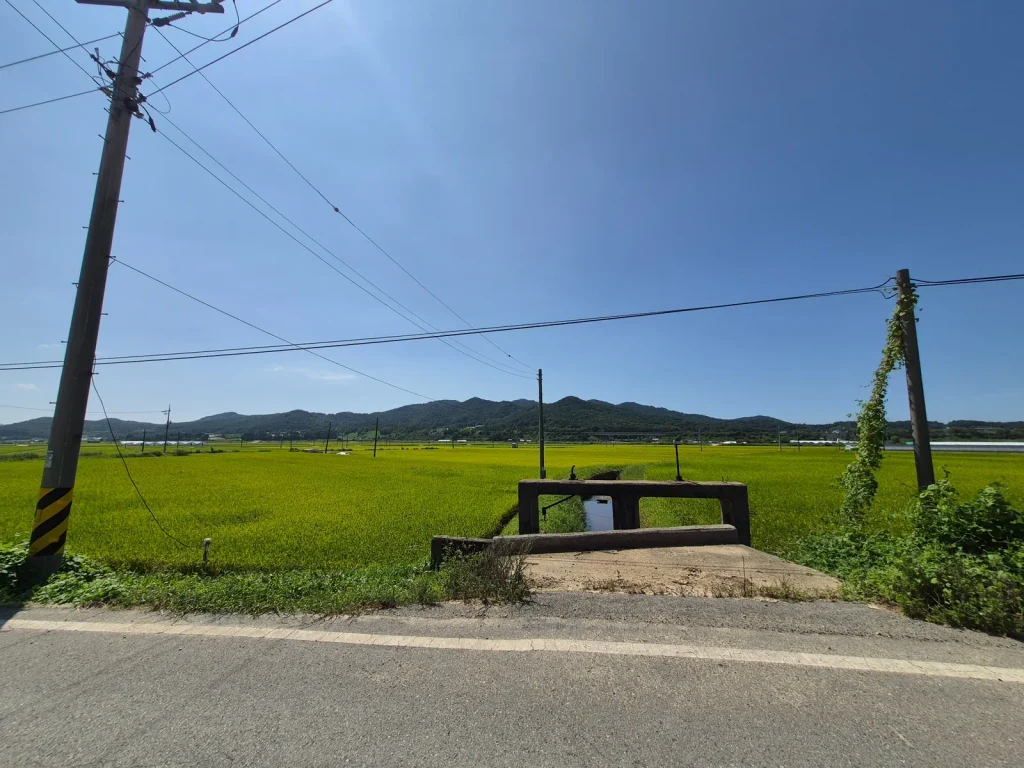
Rice fields and an irrigation channel in the countryside of Yeonggwang, South Korea.
Small Villages Are Still Part of Everyday Korea
Between the farms and fields are small villages.
Some contain older houses that have stood for decades, while others include renovated homes and newer buildings.
You may also see small gardens, farming equipment, storage buildings, greenhouses, and narrow roads running between houses.
These villages are rarely included in international travel guides.
There may be no famous attraction, café street, or souvenir shop.
But people actually live there.
Children travel to school, residents drive into town for shopping, farmers move between their homes and fields, and neighbors meet each other during ordinary daily routines.
For me, this is just everyday life.
For a visitor, however, it can show a side of Korea that is difficult to experience in Seoul.
Rural Korea Is Not Completely Isolated
It is also important not to imagine the Korean countryside as completely disconnected from modern life.
People use smartphones, shop online, drive modern cars, and travel to nearby towns and cities.
Many rural areas have modern roads and internet access, and larger towns provide supermarkets, hospitals, schools, restaurants, and other services.
The difference is mainly distance and density.
You may need to drive farther to reach certain services, and public transportation may be less convenient than in Seoul.
This is one reason why having a car can be particularly useful when living in rural Korea.
Why Tourists Rarely See This Side of Korea
There is a simple reason many international visitors do not experience places like these.
Most tourists have limited time.
Naturally, they visit famous destinations such as Seoul, Busan, Jeju Island, palaces, shopping districts, and well-known food areas.
Small farming villages usually have no major tourist attractions and may be difficult to reach without a car.
There may also be fewer English signs and less tourism infrastructure.
But that is exactly what makes these places interesting.
They were not created for tourists.
They are places where ordinary people live and work.
Korea Is More Than Its Famous Images
K-pop, Korean dramas, technology, food, and Seoul have introduced millions of people around the world to Korea.
But a country cannot be understood only through its most famous images.
Beyond the major cities are rice fields, farms, mountains, traditional markets, small towns, and quiet villages.
This part of Korea may not appear frequently on television or social media, but it is still an important part of the country.
And in places like Yeonggwang, this is not a special travel experience.
It is everyday life.
Final Thoughts
If you visit South Korea, the famous destinations are certainly worth seeing.
But if you ever have the opportunity to leave the major tourist routes, you may discover a very different side of the country.
A narrow road surrounded by rice fields may not appear in a travel guide.
A small farming village may not have anything listed as a tourist attraction.
But these ordinary places can tell you something important about how people actually live in Korea.
Sometimes, understanding a country is not about seeing its most famous places.
It is about seeing its everyday life.
And this quiet side of Korea is one that many visitors never get to see.