When people imagine Korea, they often picture Seoul—crowded streets, tall apartment buildings, busy subway stations, and brightly lit shopping districts.
But an ordinary morning in rural Korea can look very different.
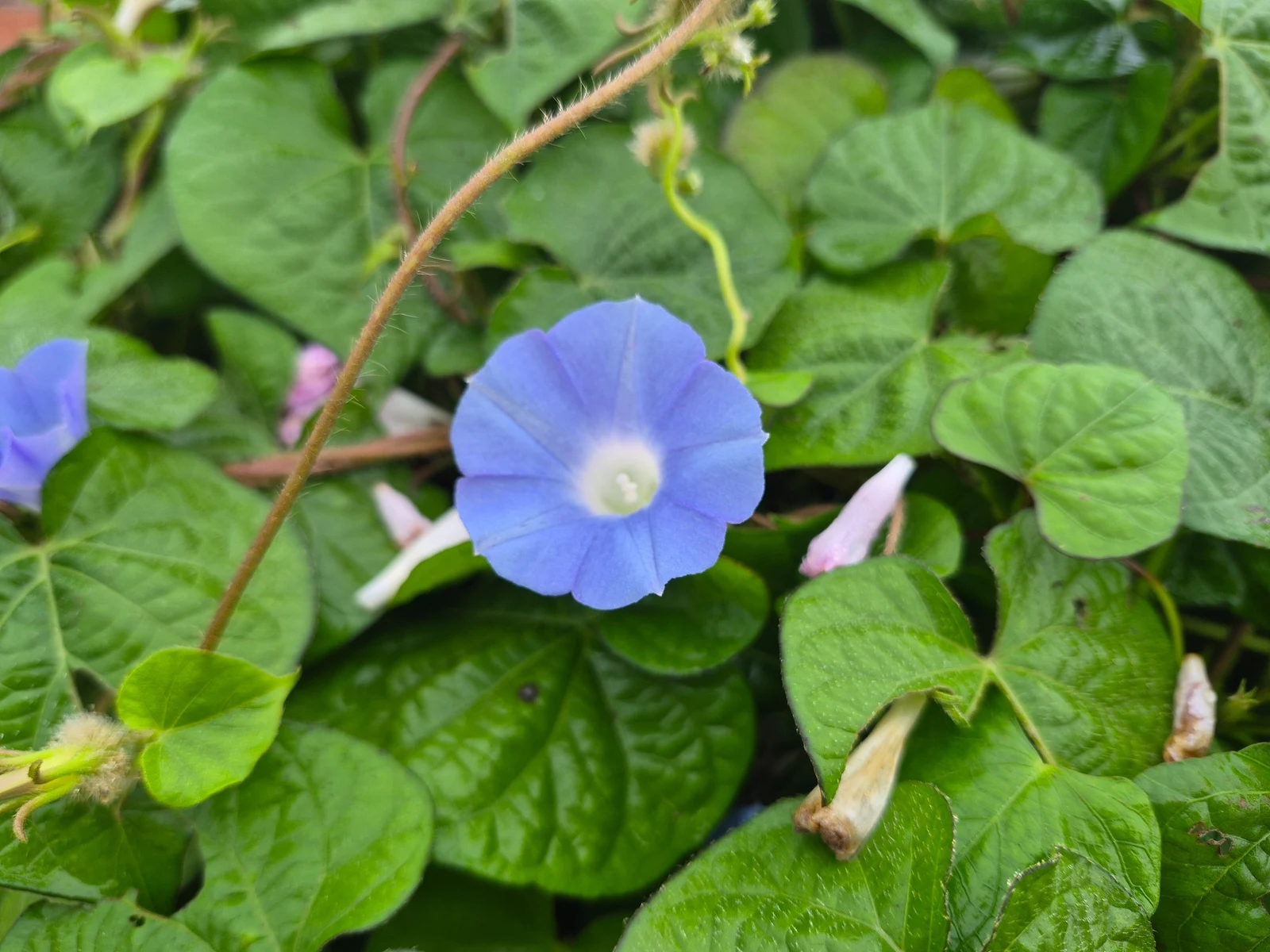
One morning, I took my children to school as usual. Around our house, morning glories were blooming in many places. At the school, I noticed a mugunghwa flower growing along the wall.
On my way back home, I began paying attention to other things that I normally passed without thinking.
An old wall covered with dried vines. A large black container used as part of everyday rural life. Narrow roads, plants, fields, and ordinary objects scattered around the village.
None of these things would normally be considered tourist attractions.
But together, they show what an ordinary morning in rural Korea actually looks like.
Morning Glories Around Our Home
Morning glories have been blooming all around our home lately.
Their blue flowers are easy to notice in the morning, especially among all the green plants growing around them.
There is nothing unusual about seeing flowers like these in the countryside. They aren’t part of a landscaped park or a garden created for tourists. They simply grow close to where people live.
That is one thing I like about living in rural Korea.
Nature doesn’t always feel separated from everyday life here. Flowers and vines grow beside houses, along walls, near fields, and next to small country roads.
Sometimes the first interesting thing you see in the morning is right outside your home.
Mugunghwa on the School Wall
After leaving home, I took my children to school.
There, along the school wall, I noticed a pink mugunghwa flower.
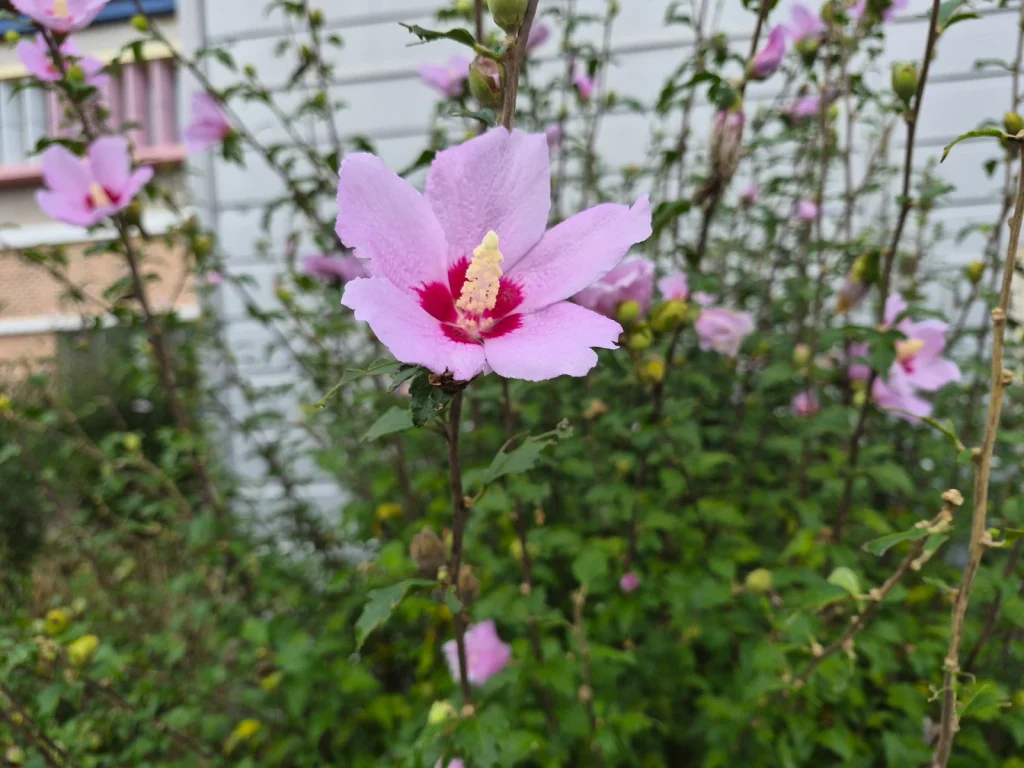
Mugunghwa, also known as the Rose of Sharon, is the national flower of South Korea. It is a familiar flower to Koreans, but seeing it blooming along the wall of a small rural school felt especially fitting.
There was no special display and no tourist sign explaining what it was.
It was simply growing there as part of the everyday surroundings of the school.
For visitors to Korea, mugunghwa may be something they first learn about as a national symbol.
For people living here, however, it can also be something you casually encounter while taking your children to school.
An Old Wall Covered With Vines
On my way home, I passed an old wall covered with the dried traces of vines.
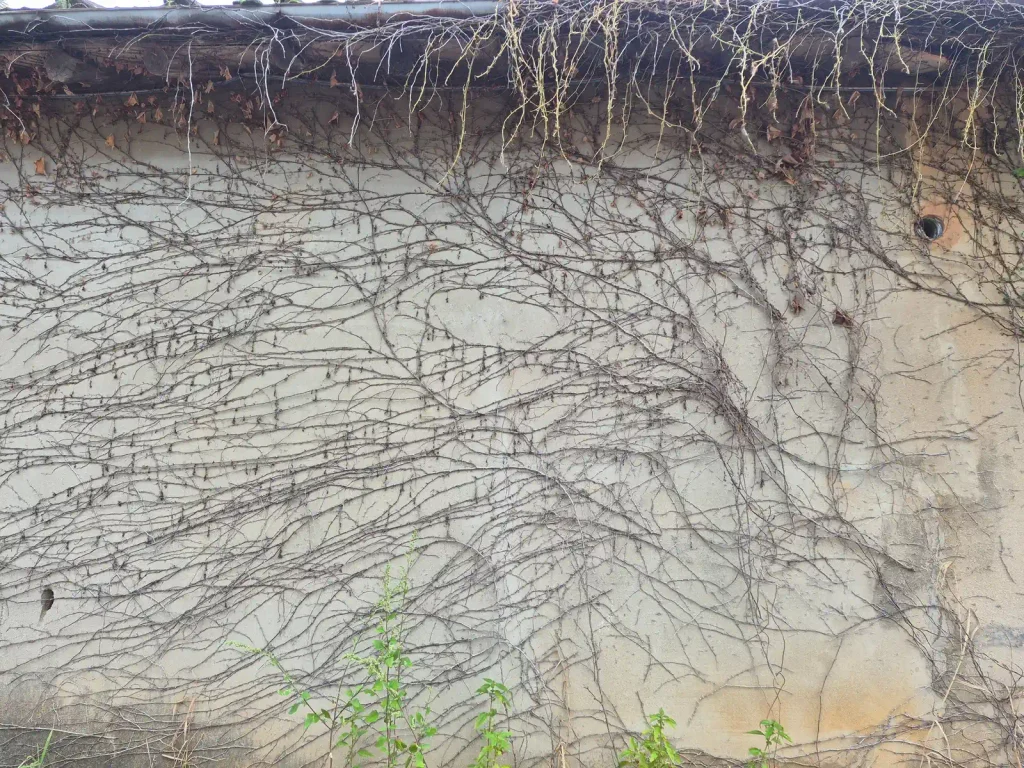
It wasn’t colorful like the flowers I had seen earlier.
The wall looked old, and the tangled vines made it look even more weathered.
But this, too, is part of rural Korea.
In older villages, the new and the old often exist side by side. A renovated house may stand near an old wall, a small shed, a field, or a structure that has been there for many years.
Not everything old is preserved as a historical site.
Some things simply remain where they have always been, quietly becoming part of the village landscape.
What Is This Black Container?
Another object I noticed was a large black container beside the road.
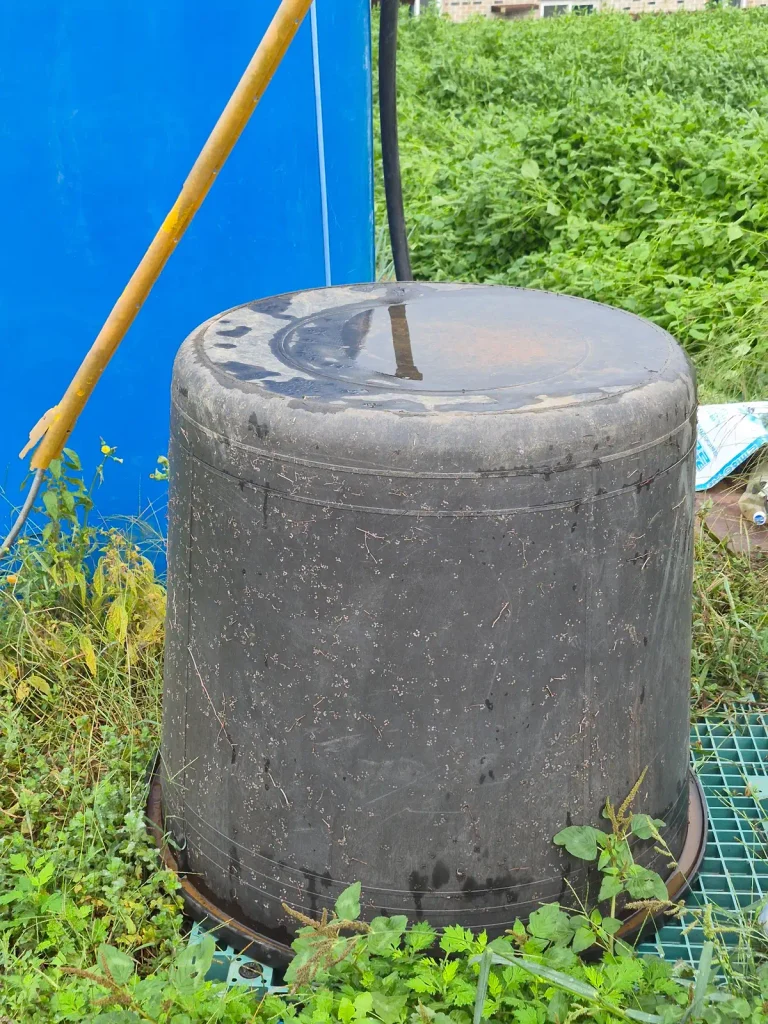
It probably wouldn’t attract the attention of most visitors.
But objects like this are very familiar in farming areas.
In the Korean countryside, containers like these can be used in different ways around farms. For example, they may be used to cover or protect equipment such as pumps or electrical components from the outdoor environment.
Their exact purpose depends on where and how they are being used.
It isn’t a traditional Korean object, and you probably won’t find it in a travel guide.
But rural Korea isn’t just rice fields, mountains, traditional houses, and beautiful sunsets.
It is also a place where people live and work.
Farm equipment, storage containers, hoses, tools, small sheds, and all kinds of practical objects are part of the landscape.
They may not be beautiful in the conventional sense, but they help show what the countryside actually looks like.
The Korea Between the Tourist Destinations
Nothing particularly special happened that morning.
I took my children to school and came home.
But during that short trip, I saw morning glories around our house, a mugunghwa flower along the school wall, an old wall covered with vines, and one of the many practical objects used in the countryside.
These are small things.
Most days, I probably wouldn’t even stop to photograph them.
But when you put them together, they tell a simple story about everyday life in rural Korea.
For travelers, Korea may be a country of palaces, famous markets, K-pop, skyscrapers, and busy cities.
All of those things are part of Korea.
But so is this.
A flower beside a house.
A mugunghwa blooming at a small rural school.
An aging wall.
Farm equipment sitting beside a country road.
Sometimes, seeing the real Korea isn’t about finding another destination.
It is about noticing what is already there.