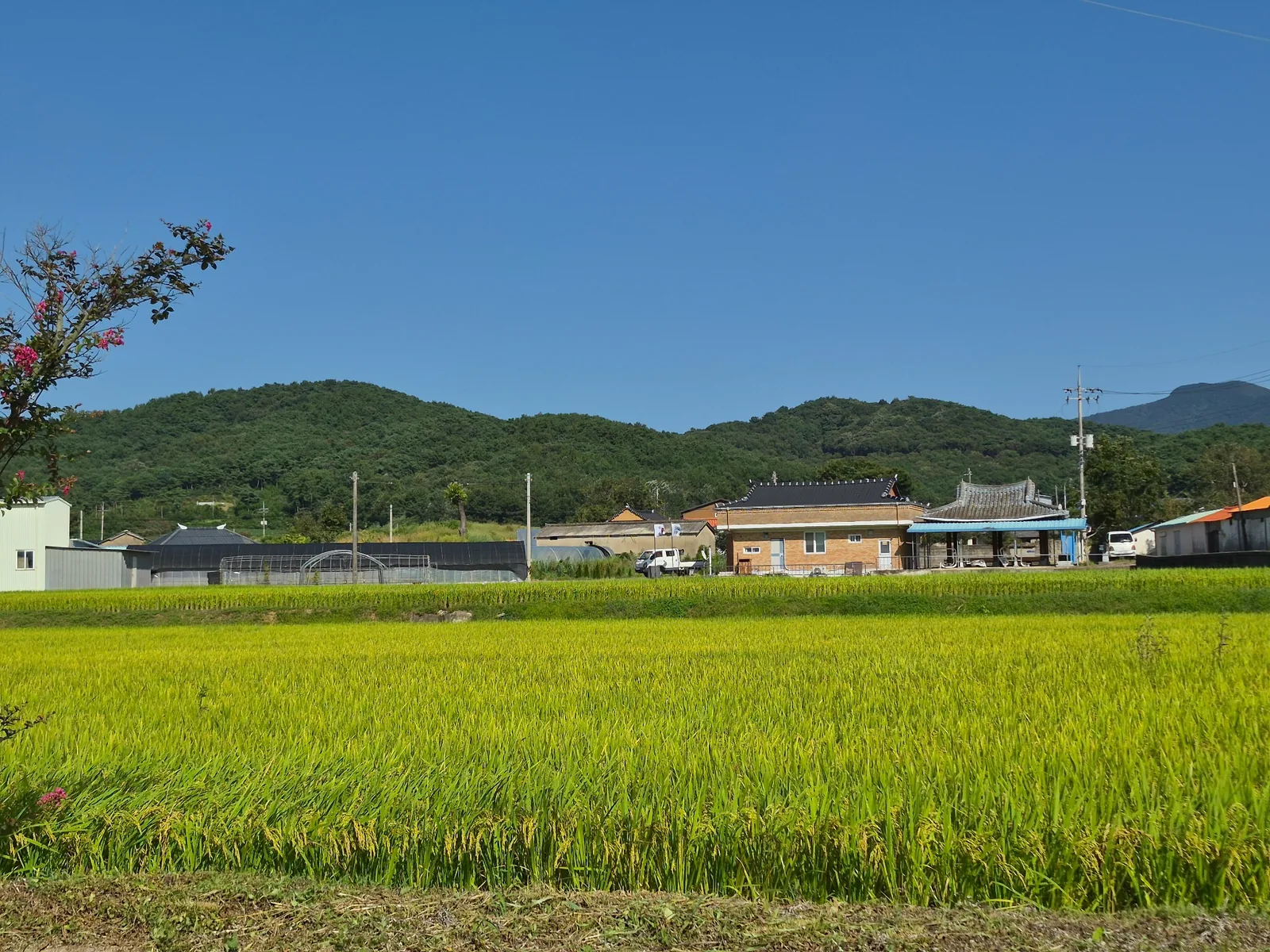
When people think about Korea, they often picture Seoul, K-pop, high-rise apartments, busy streets, and modern technology.
But Korea has another side that is very different from the image many international visitors see.
Outside the major cities, there are quiet villages, rice fields, small farms, traditional houses, local markets, and mountains.
This is rural Korea.
I live in Yeonggwang, a rural county in Jeollanam-do, and I would like to show you what everyday rural Korea can really look like.
Where Is Rural Korea?
Rural areas can be found throughout South Korea, especially outside the major metropolitan areas.
Many villages are surrounded by mountains, farmland, and forests. Some are located near the coast, while others are deep in agricultural areas.
The landscape changes dramatically with the seasons.
In spring, fields become green and farmers begin planting. Summer brings thick green rice fields, while autumn turns many fields golden as the rice ripens.
Winter is quieter, and many farmers prepare for the next agricultural season.
Farming Is an Important Part of Rural Korea
Agriculture is still an important part of life in many rural communities.
Rice is one of the most common crops, but farmers also grow vegetables, fruits, and other agricultural products depending on the region.
You can often see greenhouses, tractors, agricultural machinery, and small fields around rural villages.
Farming is not simply an old tradition. Modern technology and equipment are also becoming increasingly common on Korean farms.
Rural Korea is therefore a mixture of traditional agricultural life and modern technology.
What Does a Typical Rural Village Look Like?
A typical Korean rural village may look very different from Seoul.
Instead of tall apartment buildings, you are more likely to see detached houses, farm buildings, greenhouses, and small roads.
Some houses are quite old, while others have been newly built or renovated.
Traditional Korean roof designs can sometimes be seen alongside modern homes.
Many houses also have small yards where residents grow vegetables, fruit trees, or flowers.
The countryside is not completely frozen in the past. Old and new buildings often exist side by side.
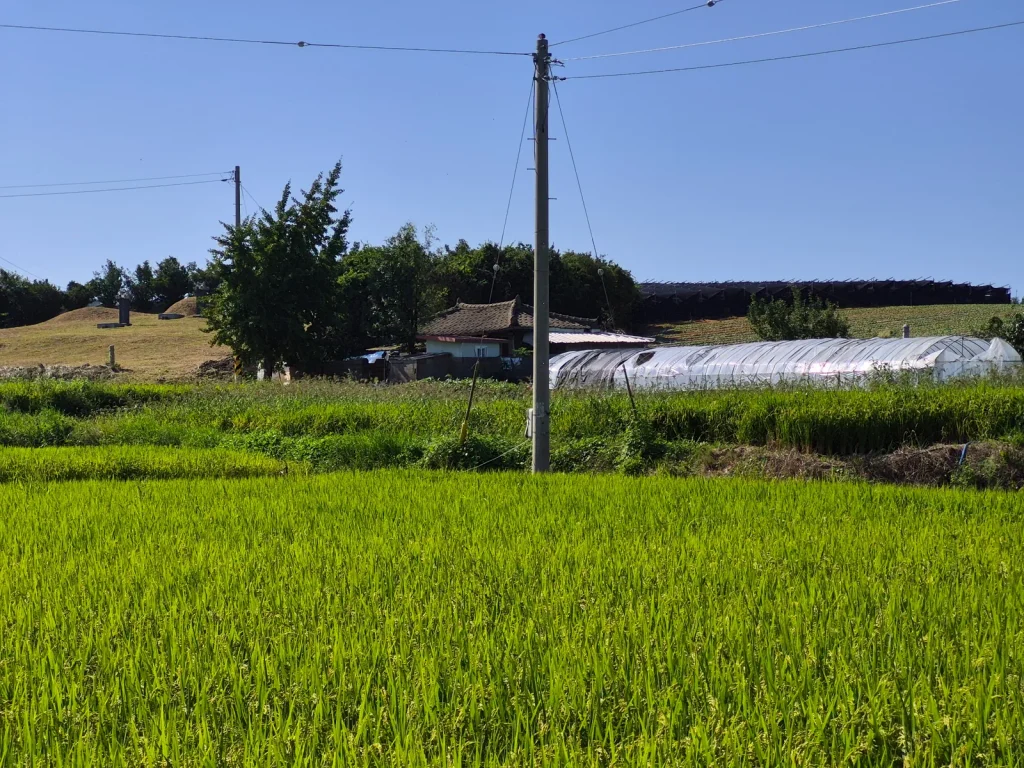
An old rural house surrounded by rice fields in Yeonggwang, South Korea.
Korean Rural Markets
One of the most interesting parts of rural life is the traditional market.
Small local markets are still important places for shopping, eating, and meeting other people.
In many rural areas, traditional markets operate on a five-day cycle, rather than being open every day.
For example, I live in Yeonggwang. The traditional market in Yeonggwang opens on days ending in 1 or 6, such as the 1st, 6th, 11th, 16th, 21st, and 26th of each month.
This means the market takes place every five days.
You can find vegetables, fruits, seafood, meat, clothing, household items, and prepared foods. For local residents, these markets are not simply tourist attractions. They are part of everyday life.
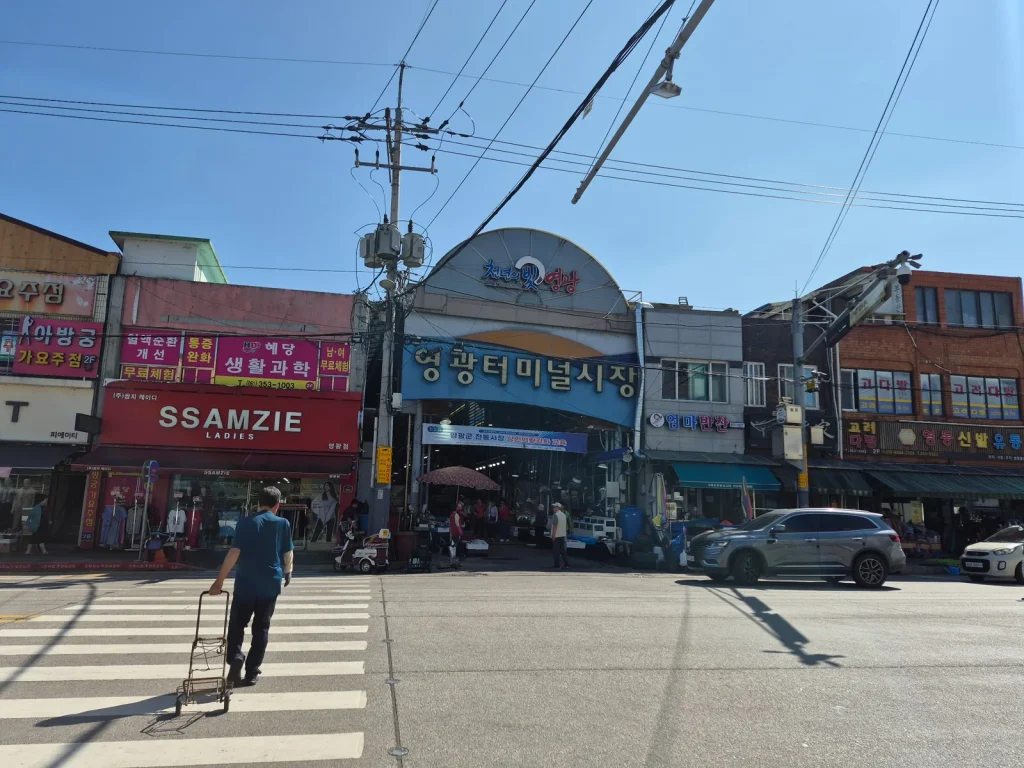
Yeonggwang Terminal Market, a traditional market in Yeonggwang, Jeollanam-do.
Food in Rural Korea
Food in rural Korea is often closely connected to the local environment.
Fresh vegetables, rice, seafood, meat, and other agricultural products can often be purchased directly from local markets or nearby producers.
Meals can also be surprisingly simple.
A typical meal may include rice, soup, several side dishes, and seasonal vegetables.
In rural areas, food is often less about presentation and more about freshness, familiarity, and eating together.
Rural Korea Is Changing
Rural Korea is changing quickly.
Some villages have aging populations, and young people often move to larger cities for education or employment.
As a result, some older houses are empty and some villages have fewer residents than they did in the past.
At the same time, new people are moving to the countryside, including farmers, retirees, and people looking for a quieter lifestyle.
Some old houses are being renovated, and new agricultural businesses are also appearing.
So today’s rural Korea is not exactly the same as the countryside of several decades ago.
It is a place where tradition and modern life continue to meet.
Why Should You Visit Rural Korea?
If you only visit Seoul or other major tourist destinations, you can see an important part of Korea.
But you will miss another side of the country.
In rural areas, you can see how people live outside the busy cities.
You can walk through small villages, visit traditional markets, see rice fields, try local food, and experience a slower-looking but often surprisingly busy way of life.
You may also discover that rural Korea is much more diverse than you expected.
The Korea Beyond K-pop
K-pop and Korean dramas have introduced Korea to people around the world.
They show one side of the country, but Korea is much bigger than entertainment and large cities.
There are farmers working in their fields, elderly residents shopping at local markets, families living in small villages, and people running businesses in places that international tourists rarely visit.
This everyday life is also Korea.
And for me, this is one of the most interesting parts of the country.
Final Thoughts
Rural Korea is not simply a place of old houses and farmland.
It is a living community where traditional lifestyles, modern technology, agriculture, local food, and changing demographics exist together.
If you want to understand a different side of Korea, look beyond Seoul.
Sometimes the best way to understand a country is not to visit its most famous places, but to see how ordinary people live.
This is the Korea beyond K-pop.