There are days when living in the Korean countryside feels especially heartwarming. Today was one of those days.
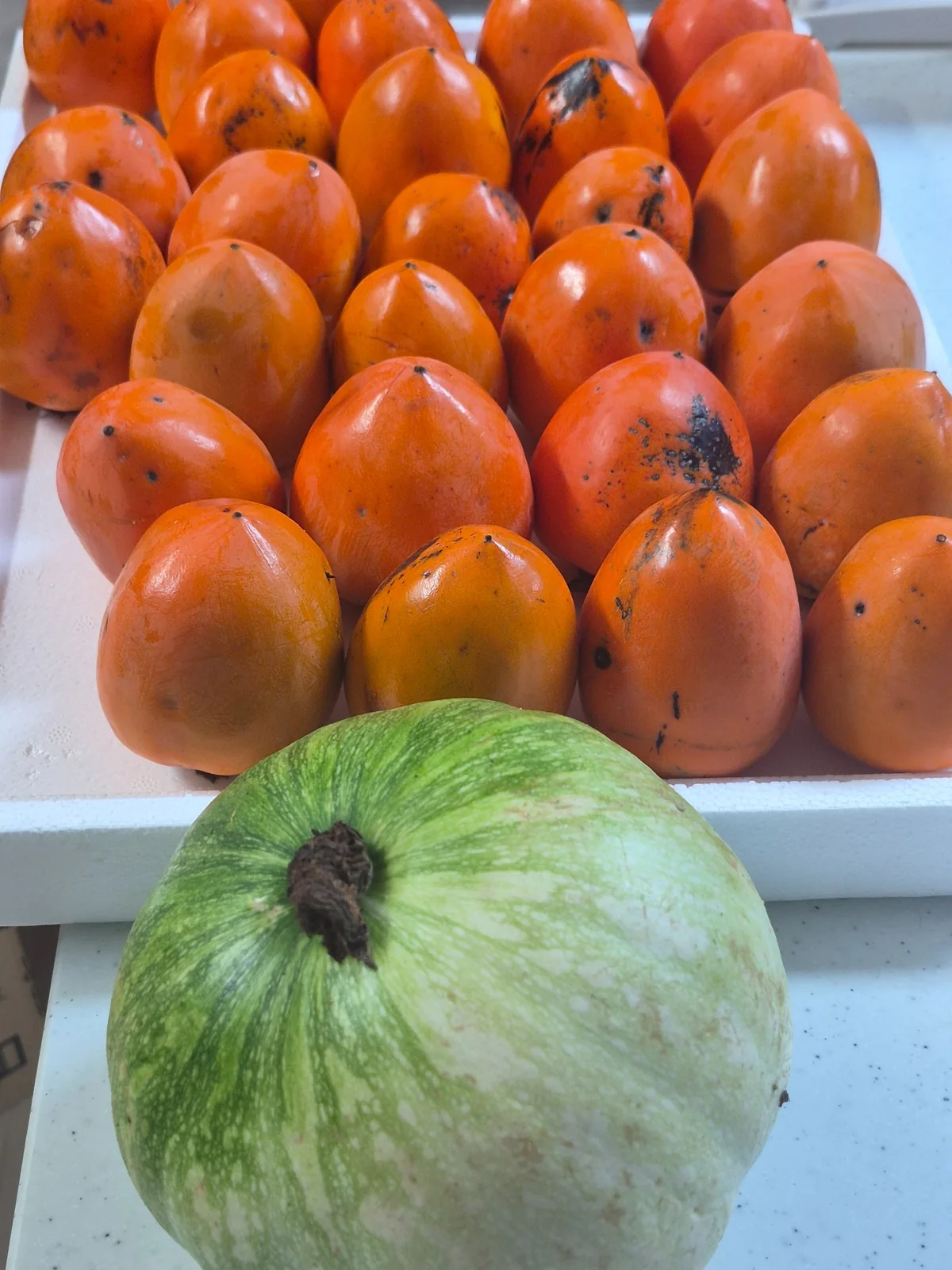
We received two unexpected gifts from our neighbors: freshly picked persimmons and a beautiful green zucchini.
Neither gift was expensive or elaborate. They were simply seasonal foods that our neighbors had grown themselves. But these small gestures reminded me once again why I appreciate life in a rural Korean village.
Fresh Persimmons from a Village Uncle
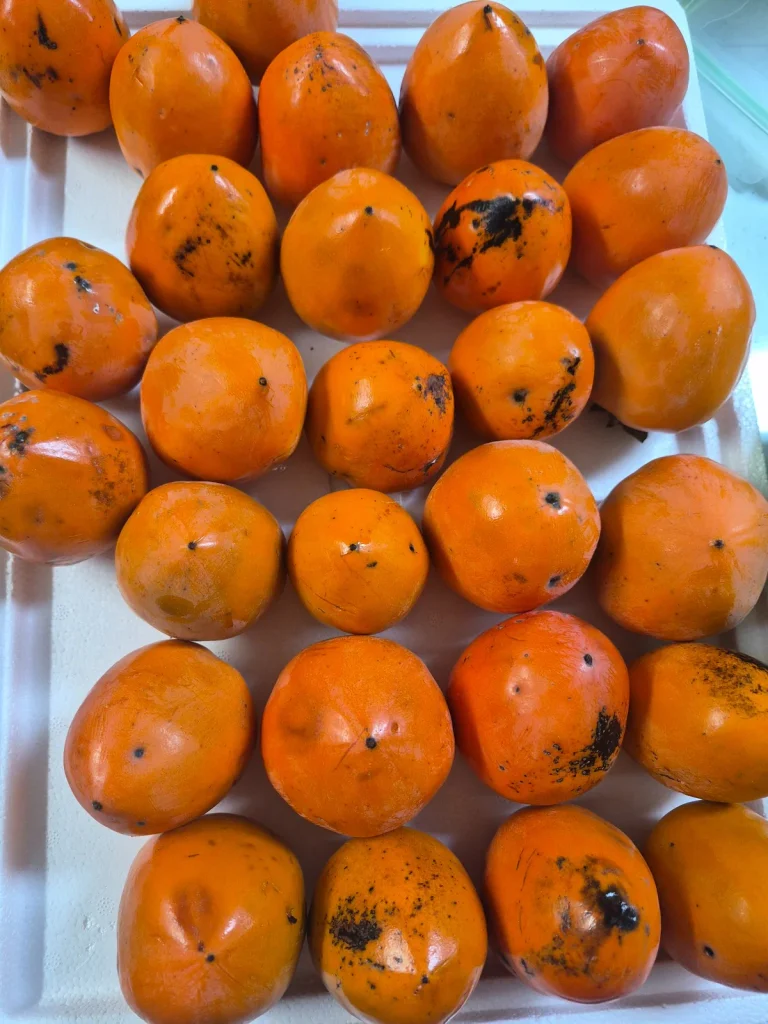
Today, a man from our village, whom we affectionately call samchon (uncle), gave us some persimmons he had picked from his trees.
In rural Korea, people sometimes call older neighbors “uncle” or “grandmother,” even when they are not actual relatives. These familiar expressions reflect the close relationships that can develop within a village.
The persimmons were a beautiful orange color, with a few natural dark marks on their skins.
They are not fully ripe yet, but that is exactly how we want them.
In Korea, soft, fully ripened persimmons are called hongsi (홍시). They are wonderfully sweet, with a soft, almost jelly-like texture.
Rather than waiting for every persimmon to become soft on the tree, people can harvest them while they are still firm and allow them to ripen afterward.
That is what I plan to do with these persimmons.
I will leave them at home to ripen naturally and enjoy them when they become soft and sweet.
A Zucchini from the Grandmother Down the Road
The persimmons were not our only gift today.
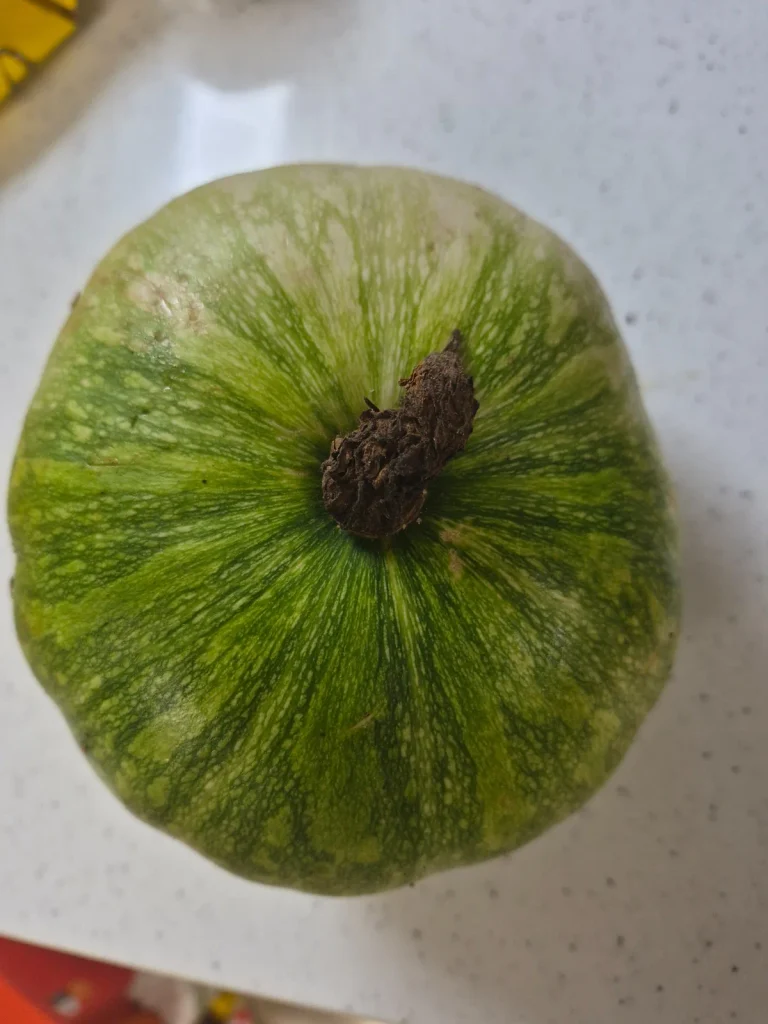
An elderly woman who lives in the lower part of our village also gave us a zucchini.
Her vegetable garden is located near our house. While passing by, she stopped and left us one of the vegetables she had grown.
It was such a simple and natural gesture.
She did not need a special reason to share it. She simply had something from her garden and thought of us.
Zucchini, known in Korea as aehobak (애호박), is a familiar ingredient in Korean home cooking.
It is often used in soybean paste stew, vegetable side dishes, and pan-fried dishes.
I have not decided how to cook this zucchini yet, but I am already looking forward to using it in a family meal.
We Don’t Have Persimmon Trees or Zucchini in Our Garden
Here is something interesting about today’s gifts.
We do not have a persimmon tree at home.
We do not grow zucchini in our vegetable garden either.
Yet we still get to enjoy both foods.
That is because of the people living around us.
In a rural village, different households grow different things. Some have fruit trees, while others grow vegetables in their gardens or fields.
When there is more than one household needs, sharing with neighbors can be a natural part of everyday life.
Of course, every village is different, and not everyone experiences the countryside in the same way.
But in our village, these small gifts are one of the things that make life feel warm and connected.
The Meaning of Sigol Insim
There is a Korean expression called sigol insim (시골 인심).
It refers to the kindness, generosity, and neighborly warmth often associated with life in the countryside.
Today’s persimmons and zucchini made me think of that expression.
A neighbor picked persimmons and remembered our family.
Another neighbor passed by our home and shared a vegetable from her garden.
Neither person expected anything in return.
These were not grand gestures. They were ordinary moments of generosity.
And sometimes, those ordinary moments mean the most.
One of the Small Joys of Living in Rural Korea
Living in the countryside is not always convenient.
There are fewer shops and services nearby, and everyday life can sometimes require more time and effort than it would in a city.
But there are also things that make rural life special.
For me, one of them is the kindness of our neighbors.
I may not grow every seasonal fruit or vegetable myself, but thanks to the people around me, I can still enjoy the flavors of each season.
Today, our kitchen is filled with orange persimmons waiting to ripen and a fresh zucchini ready to be cooked.
They may seem like ordinary foods, but to me, they represent something much more meaningful.
They are a reminder that the Korean countryside is not only about fields, farms, and quiet scenery.
It is also about the people who live there and the kindness they share.
That is what sigol insim means to me.