There is a large jujube tree right in front of our home in rural Korea.
Most of the year, it is simply part of the scenery. We pass by it every day without thinking much about it. But when autumn comes, the small green fruits begin to change color, and suddenly the tree becomes impossible to ignore.
This week, it was finally time to harvest the jujubes.
A Jujube Tree Right in Front of Our Home
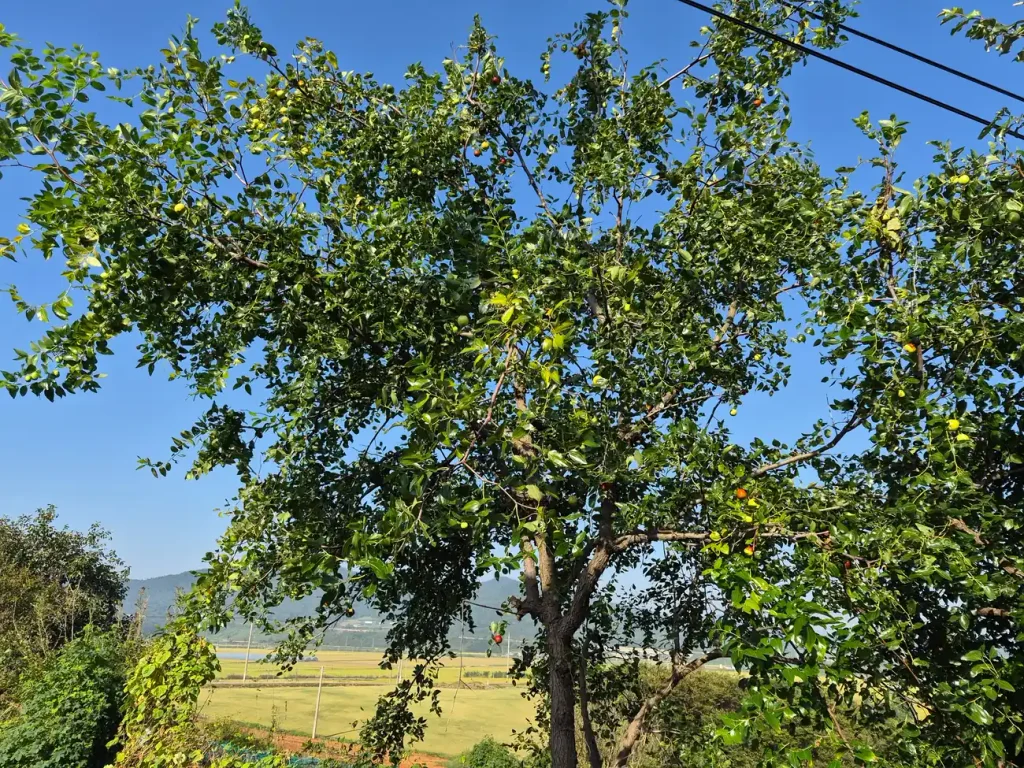
The tree is quite large, and behind it are the rice fields and low mountains that surround our village.
This is one of those ordinary views that I sometimes forget is special. In rural Korea, fruit trees are often simply part of the space around homes, gardens, and fields.
Our jujube tree was covered with fruit this year. Some were still green, while others had already turned reddish-brown.
I don’t know the exact variety of this tree. What I do know is that its jujubes are surprisingly large.
From Green to Reddish-Brown
Jujube is called daechu (대추) in Korean.
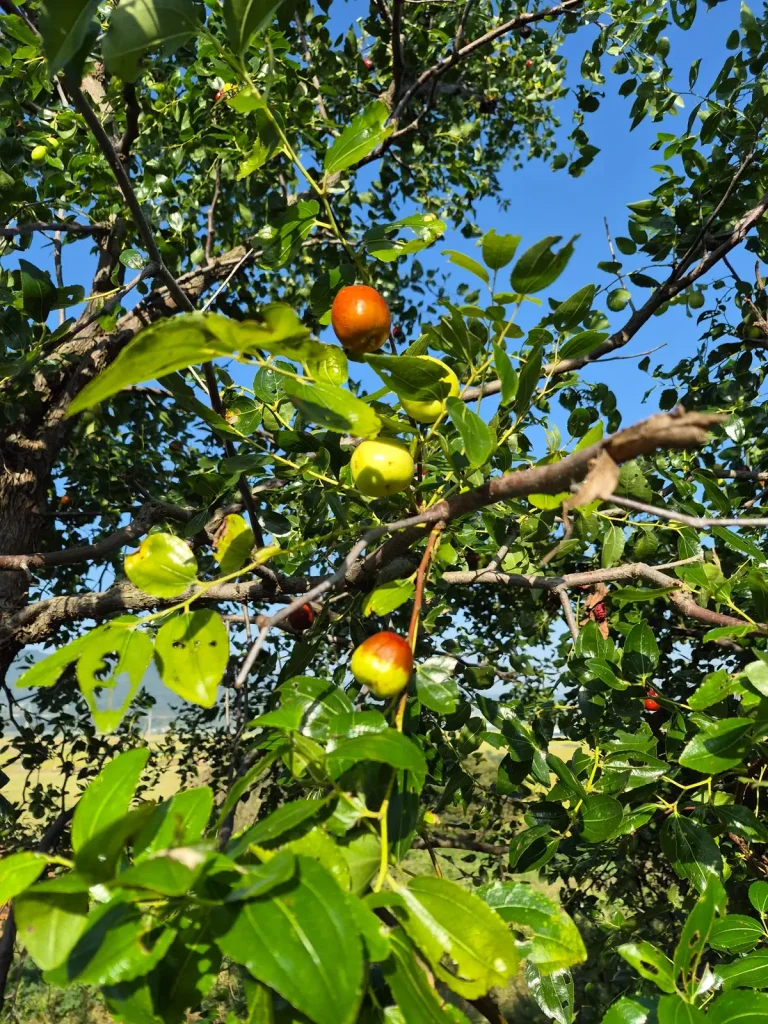
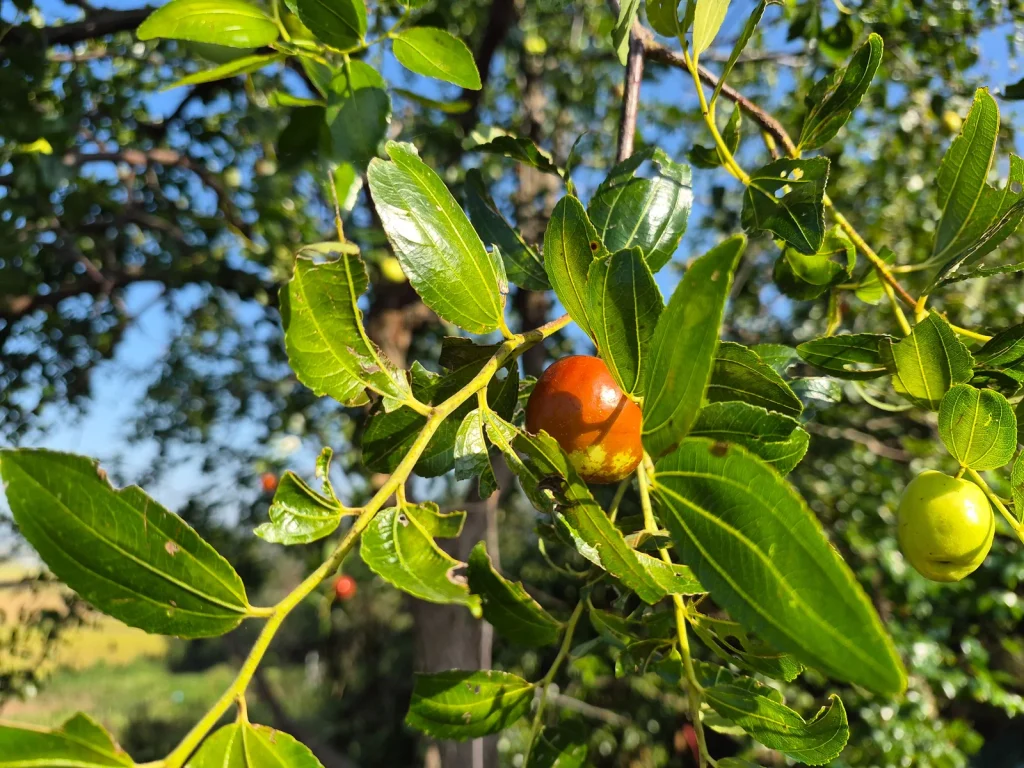
Fresh jujubes can look very different depending on how ripe they are. They begin green and gradually develop brown or reddish coloring as they ripen.
Looking closely at our tree, you could see several stages at the same time—green fruit, partly colored fruit, and deep reddish-brown fruit hanging among the leaves.
I probably waited a little too long to harvest them this year.
By the time we picked them, quite a few had become soft, and insects had already gotten to many of them. So harvesting was not simply a matter of picking everything and putting it in a basket.
We had to look through them and separate the good fruit from the damaged ones.
That is also part of having a fruit tree at home. The fruit doesn’t wait for the perfect day on your schedule.
Our Jujube Harvest
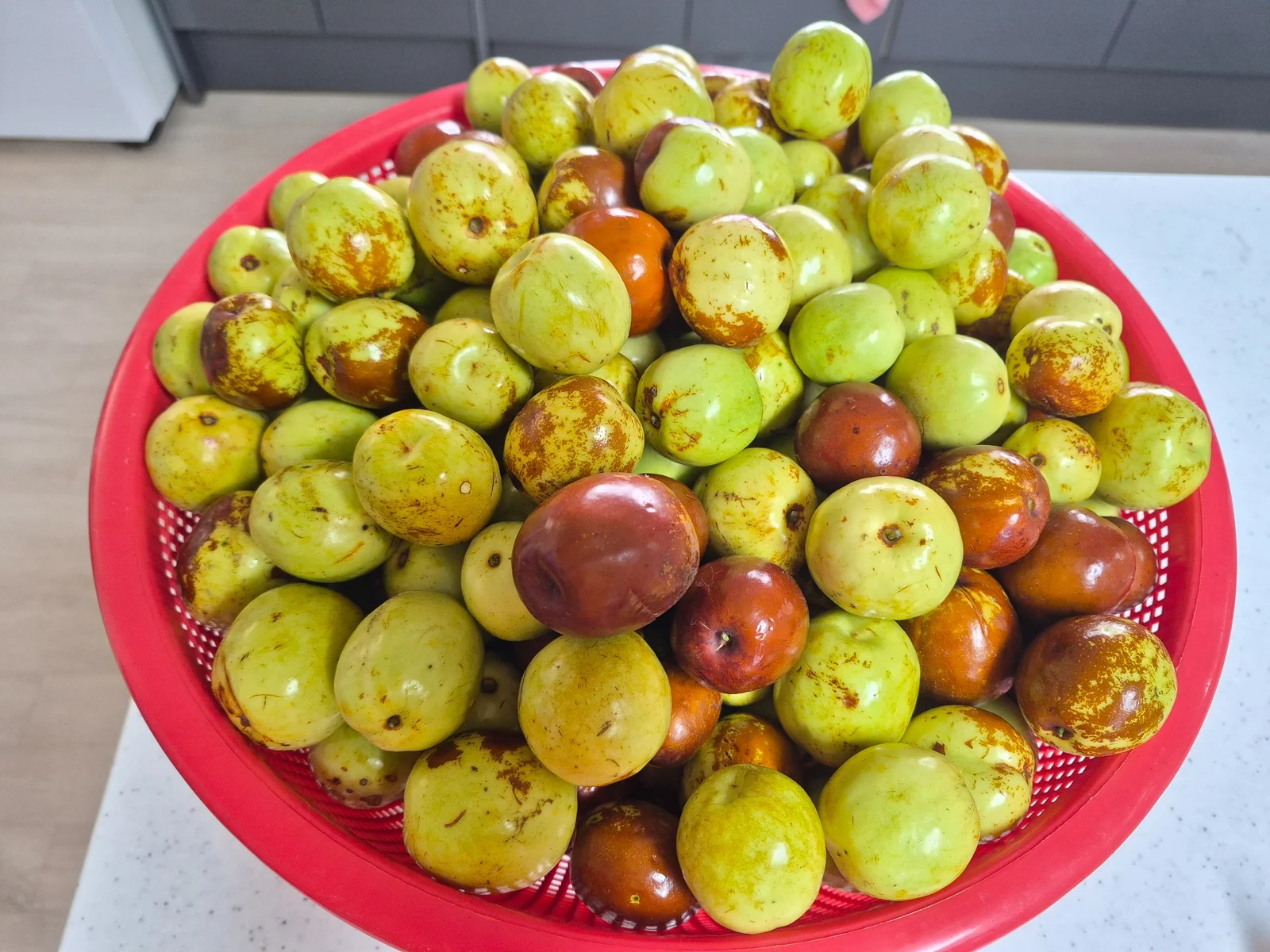
After picking and sorting them, we still ended up with a large basket of jujubes.
Some were green, some were half brown, and others were almost completely reddish-brown. They certainly didn’t look perfectly uniform like fruit arranged for sale in a supermarket.
But these came from the tree standing just outside our home.
That made them feel different.
Sharing the Harvest With a Neighbor
After the harvest, I shared the jujubes with an uncle who lives in our village.
In Korean, we sometimes call an older man we know samchon (삼촌), literally “uncle,” even when he isn’t actually a relative.
There was too much for us to keep anyway, and sharing what comes from a garden or a tree is a very natural part of life in a small village.
The basket wasn’t filled with perfect fruit. Some had marks, some were different colors, and we had already thrown away quite a few that were too soft or damaged by insects.
But this basket still felt like autumn.
A Small Part of Autumn in Rural Korea
There was nothing particularly special planned for this day.
We didn’t visit a famous farm or go somewhere specifically to experience a Korean harvest. We simply walked outside our home and picked the fruit from a tree that has been standing there all year.
And perhaps that is exactly why I wanted to share it.
When people imagine Korea, they often picture Seoul, apartment buildings, busy streets, cafés, and technology.
That Korea certainly exists.
But there is another Korea where a large jujube tree stands beside a home, rice fields stretch out behind it, and an autumn harvest ends with a basket of fruit being divided with someone who lives nearby.
It is a very small moment.
But it is also part of what everyday life in rural Korea really looks like.