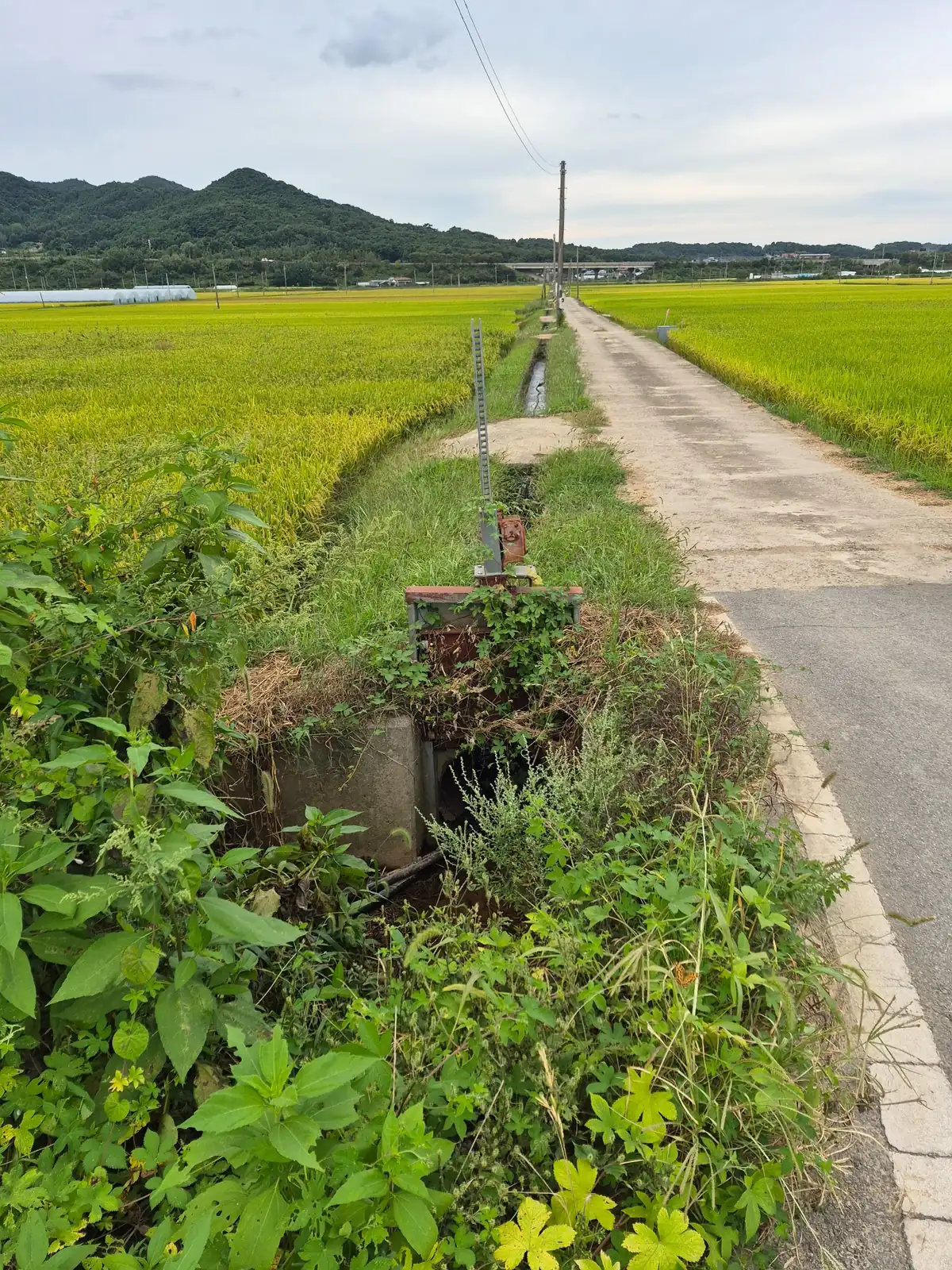
When you look across the Korean countryside, rice fields are usually the first thing that catches your eye. In late summer and early autumn, they can stretch across the landscape in shades of green and gold.
But there is another part of this landscape that is much easier to overlook.
Look beside the narrow farm roads and between the rice fields, and you will often find small channels carrying water through the countryside.
These agricultural water channels may not be beautiful landmarks or tourist attractions, but they are part of the infrastructure that makes rice farming possible.
Water Is Part of Rice Farming
Rice farming depends heavily on water management.
A rice field is not simply filled with water and left that way until harvest. Farmers need to manage water according to the growing stage of the rice, weather conditions, and local farming conditions.
In South Korea, agricultural water is managed through networks of reservoirs, waterways, irrigation facilities, drainage facilities, gates, pumps, and other infrastructure.
The Korea Rural Community Corporation explains that agricultural water management varies by farming season, region, and crop conditions. Water may be distributed in different ways to use limited supplies efficiently.
The Small Waterways Beside the Rice Fields
Some of the smallest parts of this system are also the easiest to see when walking through rural Korea.
Small channels run beside farm roads and along the edges of rice fields.
Some carry water toward farmland, while others help move excess water away. In some places, the same local network can include both irrigation and drainage functions.
For that reason, it is not always possible to look at a single channel and know exactly how it is being used at that moment.
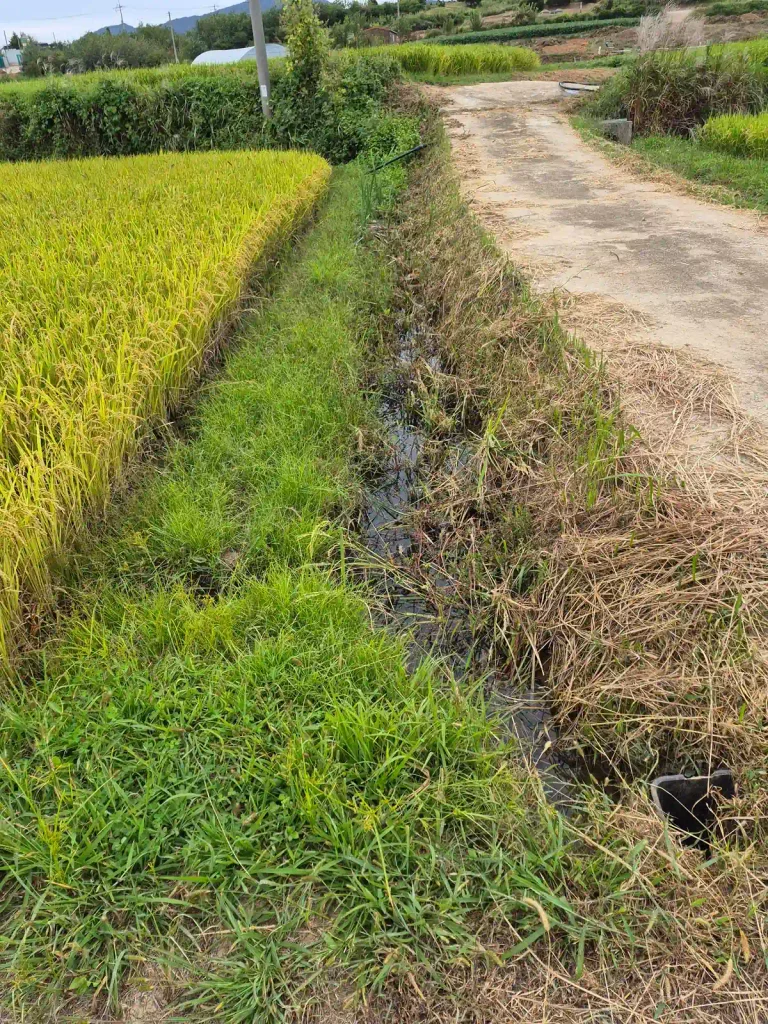
These channels can look surprisingly ordinary.
Grass grows around them. Some are made of concrete, while others can look more like narrow ditches beside a field.
For someone passing through the countryside, they might seem like an insignificant part of the landscape.
For farming, however, where water goes matters.
What Is the Metal Gate Beside the Field?
There is another structure that appears around some agricultural waterways: a water-control gate.
The metal structure in the photograph below appears to be a manually operated gate used to control water moving through the channel. Turning the mechanism can raise or lower the gate, changing the passage of water.
A small pump and hoses can also be seen beside this particular structure.
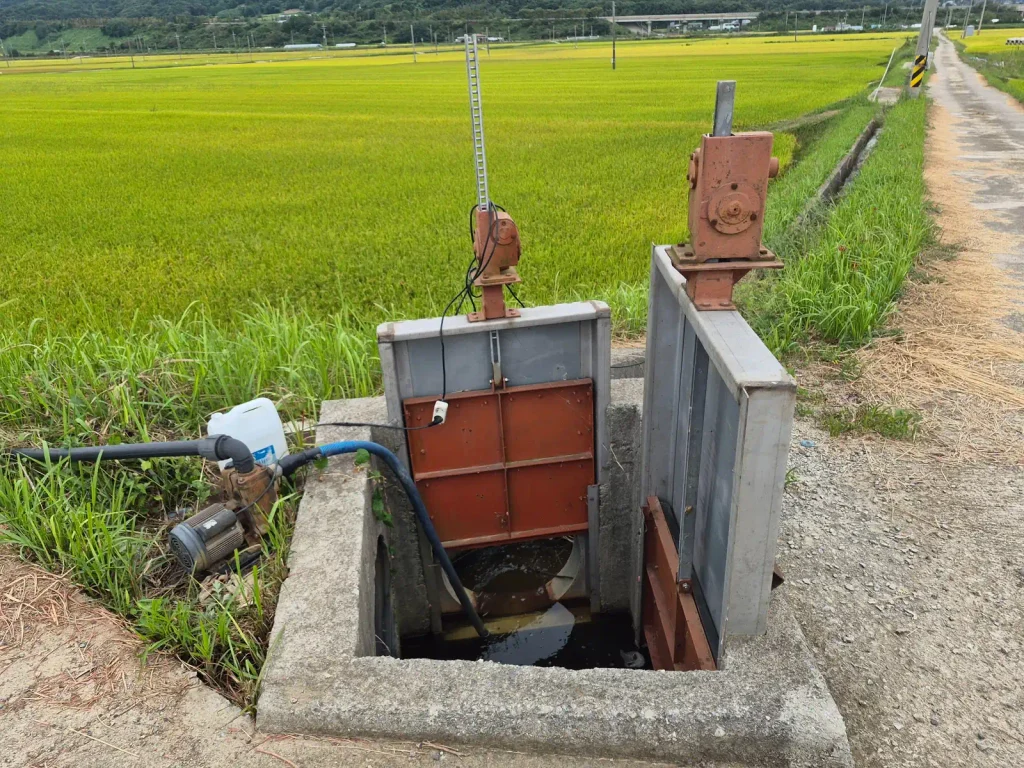
Not every agricultural water system looks exactly like this, and the purpose and management of individual facilities can differ by location.
But gates are an important part of agricultural water infrastructure because controlling when and where water moves is part of managing farmland.
Today, some larger agricultural water facilities in Korea are becoming much more sophisticated. The Korea Rural Community Corporation has been expanding systems that use monitoring and remote-control technology to manage major water facilities and distribute agricultural water more efficiently.
Who Manages Agricultural Water in Korea?
The waterways beside Korean rice fields are not all managed by one organization.
According to Korea’s Rural Agricultural Water Resource Information System, approximately 71 percent of the country’s irrigated paddy area covered by water-management facilities is managed by the Korea Rural Community Corporation, primarily in larger service areas. The remaining 29 percent is managed by local governments.
Local farmers also play a role in water management. The same source notes that farmers may participate as local facility managers, sharing responsibilities with water-management organizations.
This makes agricultural water management both a large infrastructure system and something closely connected to everyday farming.
An Ordinary Part of Rural Korea
Most people driving past these fields probably notice the rice before they notice the water channel.
That is understandable.
Rice fields change dramatically with the seasons. They are bright green during the growing season and become golden as harvest approaches.
The water channels beside them are much less noticeable.
Yet those small waterways, concrete structures, pumps, and gates reveal something important about the Korean countryside.
A rice field is not just a patch of land where rice happens to grow. Behind the landscape is a system for moving and managing water.
And once you start noticing these small channels, you begin to see them almost everywhere among the rice fields of rural Korea.